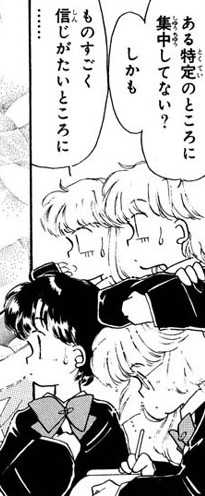
Difficult to do with 〜がたい
Grammar: Difficulty » 〜がたい
The auxiliary adjective がたい says that an action is “very difficult” or “nearly impossible”, usually for emotional or psychological reasons.
Usage Notes
がたい marks an action as extremely hard to carry out. The obstacle is often the speaker’s judgment, feelings, or moral resistance.
It appears mainly in formal, written, or literary language and is stronger than にくい or づらい.
It favors mental and emotional verbs such as 言う, 信じる, 忘れる, and 理解する over routine physical actions. For example, 食べがたい, “hard to eat”, is rare, while 理解しがたい, “hard to understand”, is common.
Formation
Verb stem + がたい
- 言う (to say) to 言いがたい (difficult to say)
- 忘れる (to forget) to 忘れがたい (difficult to forget)
The kanji form 難い is commonly used, though it may also appear in hiragana as がたい. Inui’s class is gathering photos of couples for a school festival contest. Another couple comes to join in. Visiting her new friend’s family’s café, Cocoa ponders over which menu item to order. A student from a lower grade enters the classroom. She stops and stares at Asuka Jr., one of the boys in the class.Further Reading
Examples
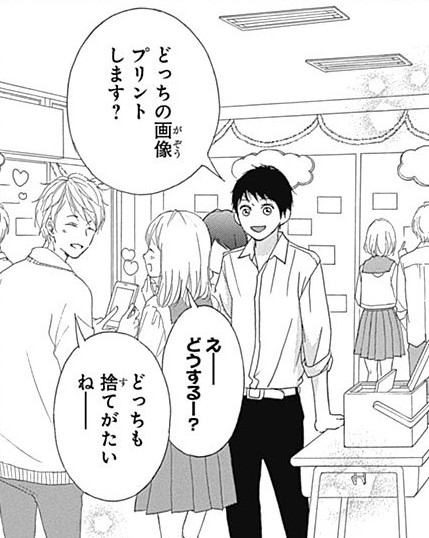
Difficult to discard a photo with 〜がたい
Difficult to pass on with 〜がたい

Hard to believe with 〜がたい