わたし from a teenage girl
Vocabulary Explanation: Personal Pronouns
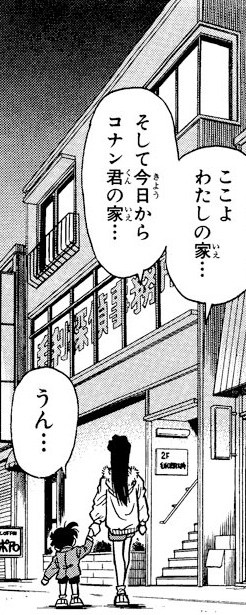
Professor Agasa convinces Ran to take Conan in to stay with her and her father.
- 蘭:
- 「ここよ わたしの家… そして今日からコナン君の家…」
- “It's here. My home... And starting today, your home...”
Although there are characters this series who use 私, it’s written out as わたし when Ran uses it. This stylistic choice by the author could be to reflect that she’s not yet an adult.
Key Points
1わたしの家 = my home
- Here わたし is the first-person pronoun “I”, and わたしの家 means “my home”.
- The key grammar is the possessive の, linking “I” to “home”.
2Hiragana わたし feels softer than 私
- Writing it in hiragana gives Ran’s speech a gentler, more youthful feel.
- 君 is an honorific suffix used after names, typically for boys or men. It’s commonly used by teachers addressing male students, by friends among young people, or by superiors addressing junior colleagues, and can also be used for girls in childhood or casual contexts.
Vocabulary
今日 (Today)
今日 means today. In formal writing, it can also mean the present day or current era.
See Also
- Vocabulary: Personal Pronouns
- Kanji: Now and the present with 今
名探偵コナン © its respective creators. It is used here for educational commentary.