A cleanup starting today with 始まる
Vocabulary Explanation: Beginnings and first times with はじめ
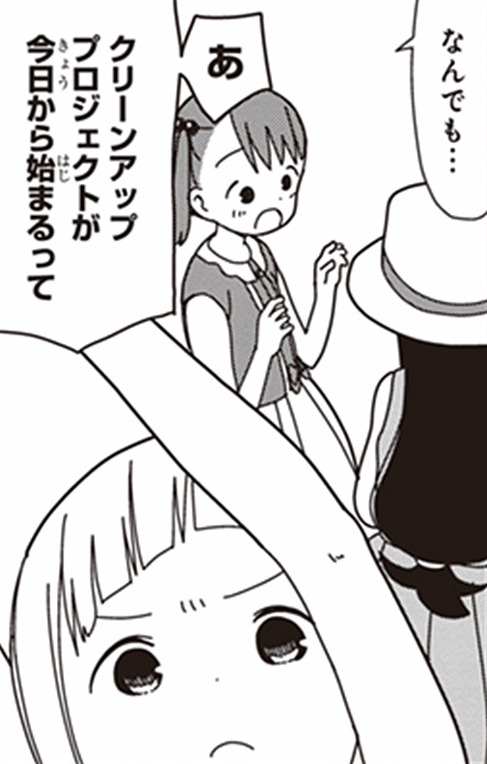
All over the neighborhood, Yui, Kotoha, and Sacchan keep finding passages marked off-limits that were open yesterday. They suspect the man who keeps chasing them out is hiding something, but every search turns up nothing. While Sacchan holds him off, Kotoha asks Yui whether anything else has changed since yesterday. Anything at all will do.
- 結衣:
- 「なんでも…」
- “Anything...”
- 「あ」
- “Oh!”
- 「クリーンアッププロジェクトが今日から始まるって」
- “They said the Cleanup Project starts today.”
Key Points
- 始まる means “to start” when the thing itself starts. Its subject is the event, marked with が, as in クリーンアッププロジェクトが始まる.
- When someone starts something, use 始める with を, as in プロジェクトを始める, “start the project”.
- 始まる has no 初 spelling. 初 is for “first” 初めて, “for the first time”, while 始 is for starting an action or event.
- から after a time word marks when something begins. 今日から始まる is “starts today” or “begins as of today”.
- It’s this “from today” that answers Kotoha’s question. The project wasn’t running yesterday.
- Ending a sentence with って passes along what someone said. The verb, 言ってた, “said”, is left out.
- Earlier in the chapter, Oyaji told the Colors about the Cleanup Project, a push to tidy the shopping street before summer vacation crowds arrive. Yui is passing that along.
Vocabulary
| Word | English | Meaning |
|---|---|---|
| なんでも | Anything | なんでも means anything or everything, whatever it is. It is the kana spelling of 何でも. |
| クリーンアップ | Cleanup | クリーンアップ is a cleanup, a job of clearing away dirt or clutter. In baseball it also names the third, fourth, and fifth hitters in the lineup. |
| プロジェクト | Project | プロジェクト is a project, a planned piece of work carried out toward a goal. |
| 今日 | Today | 今日 means today. In formal writing, it can also mean the present day or current era. |
| 始まる | To begin | 始まる is for something to start or get under way, such as a class, a game, or an event. When someone starts it, the verb is 始める. |
See Also
- Vocabulary: Beginnings and first times with はじめ
- Grammar: Quoting and reporting with と and って
- Grammar: Marking the subject with が
- Kanji: Now and the present with 今