A day off from cooking with 料理を作る
Vocabulary Explanation: Collocations for cooking
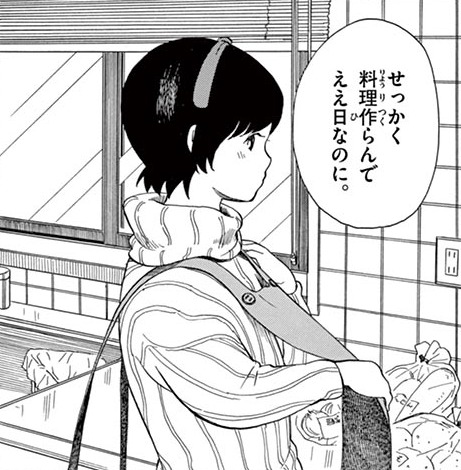
Kiyo has the day off, so she goes to see the house’s former cook.
- おばちゃん:
- 「せっかく料理作らんでええ日なのに。」
- “And on a day you finally don't have to cook, too.”
- Literal: “Even though it's a precious day when you don't have to make food.”
Key Points
1料理を作る = to cook
- 料理を作る means to make a dish or a meal. Kiyo’s job is making the house’s meals, so a day she doesn’t have to 料理作る is a day off work.
- The former cook drops を, as casual speech often does: 料理作らん for 料理を作らない.
2作らんでええ = 作らなくてもいい
- In Kansai speech, ん replaces the negative ない, and ええ means いい.
- 〜んでええ works like standard 〜なくてもいい or 〜ないでいい: “don’t have to”.
- The phrase modifies 日, giving “a day when you don’t have to cook”.
3せっかく〜のに sets a rare chance against what someone does with it
- せっかく marks something as a precious opportunity. のに adds “even though”, and the noun 日 takes な before it.
- The line leaves the second half unsaid. The former cook means Kiyo has a day free from cooking, yet she has come over to cook.
Vocabulary
せっかく (With much effort)
せっかく marks an effort or valuable opportunity that should not go to waste. Depending on the sentence, it can mean “after taking the trouble” or “since we have the chance”.
料理 (Cuisine)
料理 means cooking, cuisine, or a dish. It can refer to making food or to the food you make.
作る (To make)
作る means to create or prepare something.
日 (Day)
日 is a day. It also means the sun or sunlight.
See Also
- Vocabulary: Collocations for cooking
- Grammar: Wasted effort with せっかく〜のに
- Grammar: Grammar in the Kansai dialect
- Grammar: Even though with 〜のに
- Grammar: Must do with 〜なければならない
- Kanji: Making and creating things with 作
舞妓さんちのまかないさん © its respective creators. It is used here for educational commentary.