A hot-blooded cavalry battle with 血の気が多い
Idiom Explanation: Being hot-blooded with 血の気が多い
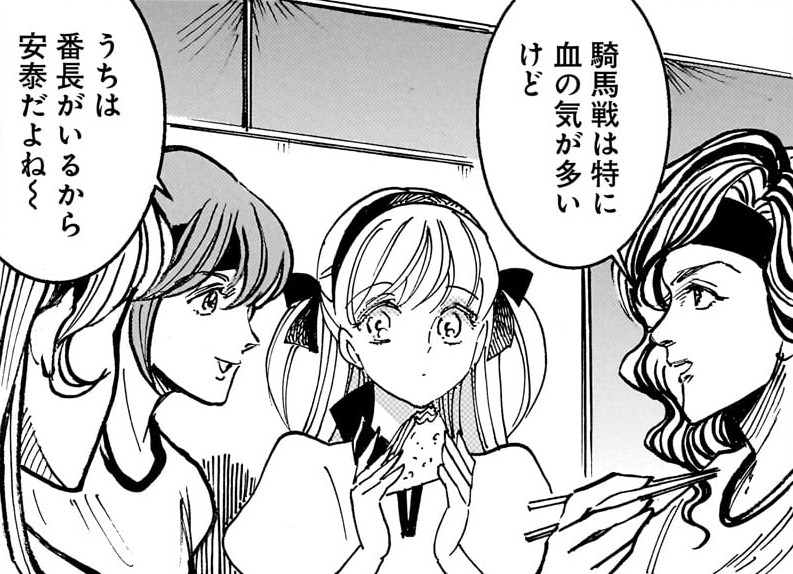
During sports day, the events break for lunch. Lulu joins her friends, and they discuss the upcoming afternoon activities.
- 響子:
- 「騎馬戦は特に血の気が多いけど」
- “The cavalry battles are especially full of hot-blooded guys, though.”
- 清美:
- 「うちは番長がいるから安泰だよね~」
- “As long as the big boss is here, we're safe and sound, right~”
Key Points
- Kyoko uses it for the cavalry-battle crowd: aggressive, excitable, and ready to clash.
- 騎馬戦は makes the cavalry battle the topic, and 特に adds “especially”.
- The implied comparison is with the other sports-day events coming after lunch.
- Kyoko leaves the thought open with けど, giving the line a trailing “though…” feeling instead of a hard warning.
- In うちは番長がいるから, うち means the speaker’s own group, not her house.
- 番長がいるから gives the reason: their big boss is there, so the group feels 安泰, safe and secure.
Vocabulary
| Word | English | Meaning |
|---|---|---|
| 騎馬戦 | Mock cavalry battle | 騎馬戦 means a school sports-day contest in which groups form human mounts and their riders try to take opponents’ caps or headbands. |
| 特に | Especially | 特に singles out one thing from the rest. |
| 血の気 | Hot blood | 血の気 is the color in one’s face. 血の気が多い describes someone hot-blooded and quick to fight. |
| 多い | Many | 多い describes a large number or amount. |
| うち | I | うち can mean “I” or “me”, especially in Kansai speech and in casual speech among women. It also has other meanings, including “home” and “inside”. |
| 番長 | Gang leader | 番長 means the leader of a group of juvenile delinquents, especially in school settings. It can also be used playfully for the dominant or toughest member of a group. |
| いる | To be | いる is to exist or be somewhere, for people and animals. After a て-form verb, it shows an ongoing action or a continuing state. |
| 安泰 | Peace | 安泰 means safe, secure, and free from worry. |
See Also
- Idiom: Being hot-blooded with 血の気が多い
- Grammar: Marking the topic with は and も
- Grammar: Marking the subject with が
- Grammar: Because with 〜から
- Kanji: Peace and ease with 安