A loss of public order at school with 治安
Kanji Explanation: Peace and ease with 安
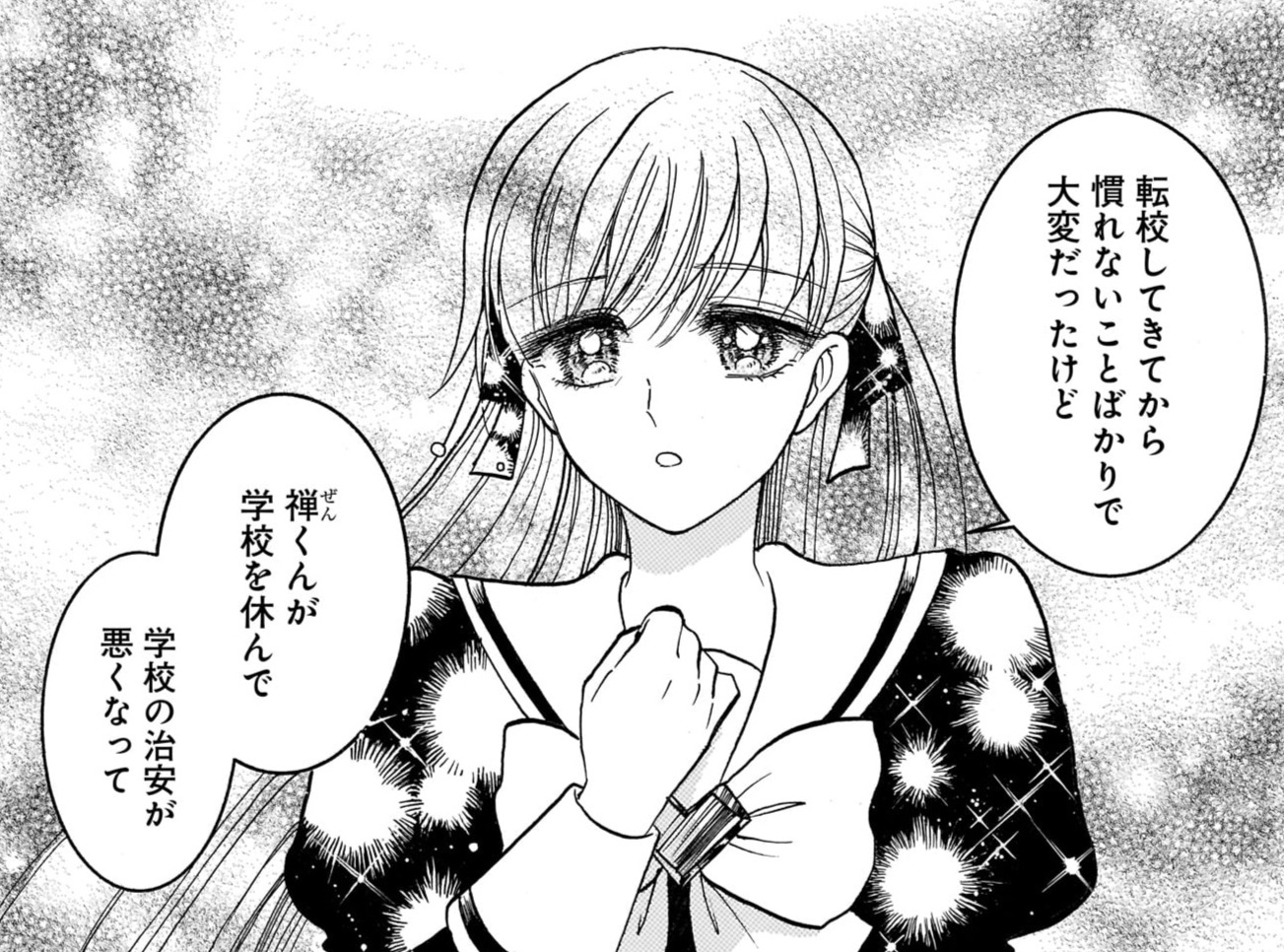
Following Zen’s absence from school for a while, fights and disobedience have taken over the school grounds. When Lulu learns Zen hasn’t been at home either during this time, she travels to the mountains in search of him. After finding him, she explains the situation at school.
- ルル:
- 「転校してきてから慣れないことばかりで大変だったけど禅くんが学校を休んで学校の治安が悪くなって」
- “Since I transferred to this school, everything has been unfamiliar and difficult, but ever since you've started missing school, the school's security has gotten worse...”
- Literal: “Since transferring here, it was hard because everything was unfamiliar, but Zen-kun has been absent from school and the school's public order has gotten worse...”
Key Points
- In this scene, 学校の 治安 means the overall order and discipline at school have broken down.
- It is broader than just “crime”; Lulu is talking about fights, unrest, and students behaving badly.
- 慣れないことばかりで means she was dealing with “one unfamiliar thing after another” after transferring.
- That helps set up the contrast with だったけど: things were already hard, and then the school situation got even worse.
- The final 悪くなって is a て-form that connects forward, so Lulu’s thought continues beyond this line rather than ending neatly here.
- 君 is an honorific suffix used after names, typically for boys or men. It’s commonly used by teachers addressing male students, by friends among young people, or by superiors addressing junior colleagues, and can also be used for girls in childhood or casual contexts.
Vocabulary
転校 (Changing schools)
転校 means transferring from one school to another.
大変 (Serious)
大変 means serious, terrible, or difficult. As an adverb, it means “very”.
学校 (School)
学校 means a school, where teachers provide organized instruction to students.
治安 (Public order)
治安 means public safety and social order, especially the level of crime and disorder in an area.
悪い (Bad)
悪い means bad, wrong, or at fault. In conversation, it can also express an apology.
See Also
- Kanji: Peace and ease with 安
- Future entry: Past tense with 〜た・〜だ
- Grammar: Marking the direct object with を
- Kanji: Learning and schooling with 学
- Kanji: Schools and checking with 校