A not so chance encounter with 奇遇
Kanji Explanation: Strangeness and wonder with 奇
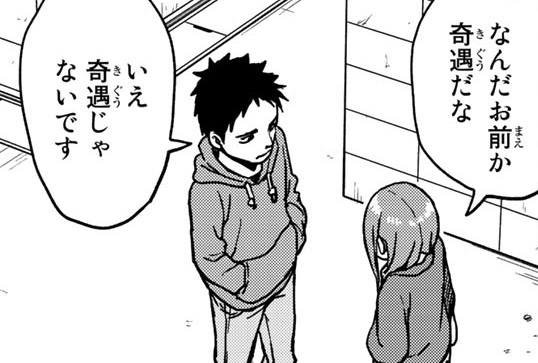
On her way home from grocery shopping, Urushi sees Ayumu from shogi club at school.
- うるし:
- 「なんだお前か 奇遇だな」
- “Oh, it's you. What a coincidence.”
- Literal: “What, it's you. It's a coincidence, huh.”
- 歩:
- 「いえ 奇遇じゃないです」
- “No, it's not a coincidence.”
Key Points
1奇遇 = “coincidence” in a chance meeting
- 奇遇 means an unexpected meeting or event that feels surprising, so Urushi uses it when she runs into Ayumu outside school.
- The kanji 奇 carries the sense of “strange” or “unexpected”, and 遇 points to an encounter.
2なんだお前か
- なんだ marks mild surprise on recognition, like “Oh, so it’s you.”
- お前 is casual and blunt, fitting Urushi’s familiar tone with Ayumu.
3奇遇だな
- The だ makes the noun 奇遇 into a complete statement: “It’s a coincidence.”
- The ending な adds a casual, self-directed feel, as if she is commenting on the situation.
4奇遇じゃないです
- Ayumu directly negates her word with じゃないです, the polite negative of だ.
Vocabulary
奇遇 (Fortuitous meeting)
奇遇 means a chance encounter or strange coincidence.
See Also
それでも歩は寄せてくる © its respective creators. It is used here for educational commentary.