A pair of binoculars among other items with 双眼鏡
Kanji Explanation: Reflection and optics with 鏡
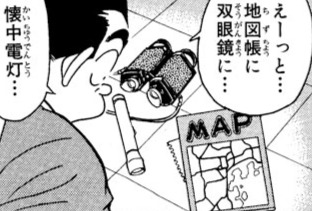
Ayumi leaves the bag with her new Masked Yaiba doll outside while she’s in the restroom. When she returns, she finds the bag waiting for her, but the doll is gone. Ran suggests someone may have taken her bag by mistake. Genta decides to see what’s in the bag Ayumi brought back, dumping its contents onto the ground.
- 元太:
- 「えーっと… 地図帳に双眼鏡に…」
- “Um... an atlas, binoculars...”
- Literal: “Umm... an atlas and binoculars and...”
- 「懐中電灯…」
- “...a flashlight...”
- Literal: “A flashlight...”
Key Points
1双眼鏡 = “binoculars”
- In this scene, 双眼鏡 refers to a pair of binoculars among the items in the bag.
- The compound is literally “double-eye optical instrument”: 双 = “pair/double”, 眼 = “eye”, and 鏡 in compounds like this points to optics/lenses rather than just a household mirror.
2Listing pattern: Aに Bに…
- 地図帳に 双眼鏡に… is a casual spoken way to list items one after another, like “an atlas, binoculars, …”
- The repeated に here works like a running inventory as Genta names what he sees.
3Hesitation and trailing-off speech
- えーっと… is a filler like “umm…” used while thinking or sorting things out.
- The ellipses show that he is not giving a polished full sentence; he is simply reading off the contents as he looks over them.
Vocabulary
地図帳 (Atlas)
地図帳 means an atlas or bound collection of maps.
双眼鏡 (Binoculars)
双眼鏡 means binoculars, an optical device for viewing distant objects with both eyes.
懐中電灯 (Flashlight)
懐中電灯 means a handheld, battery-powered flashlight.
See Also
- Kanji: Reflection and optics with 鏡
- Kanji: Earth and places with 地
- Kanji: Electricity and communication with 電
- Kanji: Seeing and insight with 眼
名探偵コナン © its respective creators. It is used here for educational commentary.