A patient's daughter with 診ていただく
Vocabulary Explanation: Ways of seeing with みる
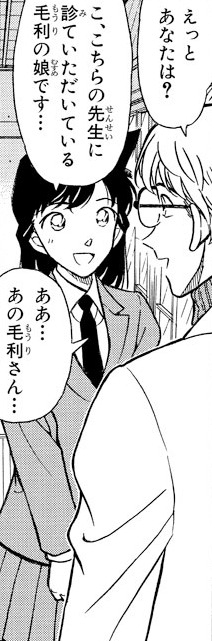
Kogoro has been feeling tired and has been seeing Dr. Araide, who runs a clinic from his home. He brought Ran and Conan along to hear his test results, which showed mild liver damage from drinking. While the doctor takes a phone call, Ran goes to find the bathroom and bumps into a young man in a white coat.
- 智明:
- 「えっと あなたは?」
- “Um, and you are?”
- 蘭:
- 「こ、こちらの先生に診ていただいている毛利の娘です…」
- “I-I'm the daughter of Mouri, who's being treated by the doctor here...”
- 智明:
- 「ああ…あの毛利さん…」
- “Oh... that Mr. Mouri...”
Key Points
- 診る is a doctor examining a patient. 〜ていただく is the humble form of 〜てもらう, so 先生に診ていただく is “be examined by the doctor”.
- に marks the doctor, the one doing the examining.
- 〜ている shows an ongoing arrangement. Her father is under this doctor’s care, which is more than a single visit.
- こちらの先生に診ていただいている describes 毛利: “Mouri, who’s being treated by the doctor here”. Then 毛利の娘です is “I’m Mouri’s daughter”.
- Ran calls her father 毛利 with no さん. Speakers drop honorifics for their own family when talking to people outside it. The young man adds one back with 毛利さん.
- こちらの先生 is “the doctor here”. こちら is the polite word for ここ, and it points to the clinic Ran is standing in.
Vocabulary
| Word | English | Meaning |
|---|---|---|
| あなた | You | あなた is a polite word for the person you are speaking to. Japanese speakers often avoid it and use the person’s name or title instead. A wife may also call her husband あなた. |
| こちら | This way | こちら is a polite word for “here”, “this way”, or “this one”. It can also politely mean “I” or “we”. |
| 先生 | Teacher | 先生 is a respectful title for teachers and certain professionals, including doctors, lawyers, and politicians. Speakers do not normally use it for themselves. |
| 診る | To examine | 診る is for a doctor to examine a patient, as in checking someone’s pulse or looking at an injury. 医者に診てもらう means to see a doctor. |
| いただく | To receive | いただく is a humble way to say you receive something from someone of higher standing, or that you eat or drink. After a て-form verb, it means someone does something for you. |
| 娘 | Daughter | 娘 means daughter. Depending on context, it can also mean a girl or young woman. |
| あの | That | あの comes before a noun to mean “that” or “those”. It points to someone or something away from both speakers, or something they both know about. |
See Also
- Vocabulary: Ways of seeing with みる
- Grammar: Having someone do something with 〜てもらう
- Grammar: Ongoing actions and resulting states with 〜ている