A whiff of crime with 犯罪
Kanji Explanation: Crimes and offenders with 犯
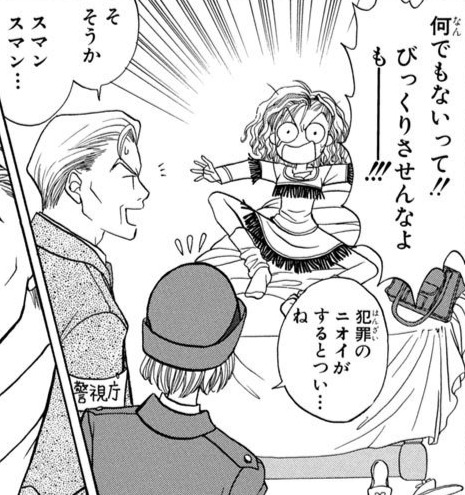
A classmate shows off her new satchel from Meisho Daichi High School. Ran wants one for herself, so she heads down to Shibuya in search of a Meisho Daichi student who’ll give her one. She accidentally steals one, which she later ruminates on in her room. As she talks to herself about how her pride cannot abide stealing, her police officer parents burst into her room, asking what was stolen and who the suspect is.
- 蘭:
- 「何でもないって!! びっくりさせんなよ もーーーー!」
- “It's nothing!! Don't scare me like that! Seriously!!”
- 泰三:
- 「そ そうか スマン スマン…」
- “Oh... okay. Sorry, sorry...”
- 清香:
- 「犯罪のニオイがするとつい…ね」
- “When I smell a crime, I just can't help myself...”
- Literal: “When there is a smell of crime, I just instinctively...”
Key Points
1犯罪 = “crime” or “criminal offense”
- Here 犯罪 is the official-sounding word for a crime, matching the parents’ police-officer mindset.
2犯罪のニオイ = “the smell of crime”
- The の links 犯罪 to ニオイ: literally, “a crime smell” or “the smell of crime”.
- ニオイ is written in katakana here, which gives the word a more punchy, sensory feel than plain hiragana.
3〜がすると = “when I sense…”
- ニオイがする means “there is a smell” or, from the speaker’s perspective, “I smell/sense it.”
- With と, the phrase becomes a trigger: when that smell is present, she reacts automatically.
4つい…ね softens the excuse
- つい marks something done unintentionally, almost by reflex; here it supports “I just can’t help myself.”
- The trailing …ね makes the line feel like a sheepish explanation after overreacting.
Vocabulary
犯罪 (Crime)
犯罪 means a crime or criminal offense.
See Also
- Kanji: Crimes and offenders with 犯
- Grammar: Quoting and reporting with と and って
- Grammar: Natural result with 〜と
GALS! © its respective creators. It is used here for educational commentary.