According to Alicia with 〜によると
Grammar Explanation: According to with 〜によると and 〜によれば
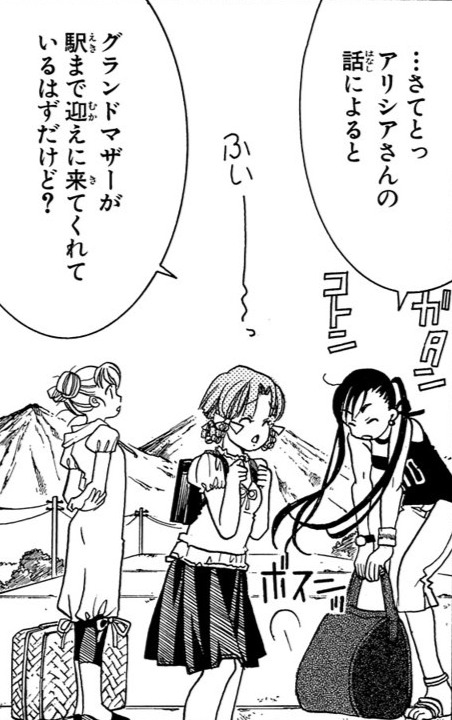
Akari, Aika, and Alice take the train to visit with Grandmother, the founder of Aria Company. Upon arrival, they disembark with their luggage.
- 藍華:
- 「…さてとっ アリシアさんの話によると」
- “Now then, according to Alicia...”
- 「グランドマザーが駅まで迎えに来てくれているはずだけど?」
- “Grandmother should be here at the station to meet us, though...?”
Key Points
1アリシアさんの話によると names the source
- アリシアさんの話 means “what Alicia said”. Adding によると gives “according to what Alicia said”.
- Alicia supplied the information. The next line says what Aika expects on that basis.
2はず expresses an expectation
- Aika expects Grandmother to be at the station to meet them. はず gives the sense of “should be” or “is supposed to be” based on information she has.
- The trailing だけど? leaves a “but…?” hanging. Aika sounds puzzled as she looks for the person she expected to find.
3迎えに来る means “come to meet someone”
- 迎え is the stem of 迎える, and に marks the purpose of coming. Grandmother is coming to meet the arriving girls.
- 駅まで gives the endpoint of her trip, the station. The people she is meeting, “us”, are understood from the scene.
4来てくれている presents her visit as a favor
- 来てくれる describes Grandmother coming for the girls’ benefit. Grandmother remains the person doing the action.
- With 〜ている, Aika expects her to have come and be there now. The line is about her expected presence at the station.
Vocabulary
話 (Talk)
話 is a talk or conversation. It also means a story, or what someone said.
駅 (Station)
駅 is a train station.
迎える (To meet)
迎える is to go and meet someone who is arriving. 迎えに来る means to come pick someone up.
来る (To come)
来る means to come or move toward the speaker or the place being discussed.
See Also
- Grammar: According to with 〜によると and 〜によれば
- Grammar: Expectation with はず
- Grammar: Coming to for a purpose with 〜に来る
- Grammar: Receiving kindness with 〜てくれる
- Grammar: Ongoing actions and resulting states with 〜ている
- Grammar: Until an action occurs with 〜まで
- Grammar: But with 〜けど and 〜けれど
ARIA The MASTERPIECE © its respective creators. It is used here for educational commentary.