Asking to have tea with 〜てもいい
Grammar Explanation: Permission to do with 〜てもいい
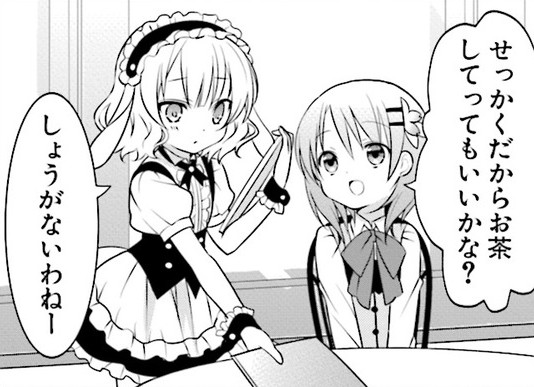
Following a misunderstanding, Cocoa and her friends ended up at the tea house where Syaro works.
- ココア:
- 「せっかくだからお茶してってもいいかな?」
- “Since we have the chance, would it be okay if we had some tea ?”
- Literal: “Since we have the chance, I wonder if having tea is okay even if we do it?”
- シャロ:
- 「しょうがないわねー」
- “I guess it can't be helped.”
Key Points
1お茶してってもいい asks permission to stay for tea
- Cocoa checks whether the group may have tea before leaving the shop.
2してって contracts していって
- お茶していく describes stopping for tea on the way, and casual speech compresses していって to してって.
3かな makes the request less direct
- The literal “would it be okay” becomes a tentative request, while せっかくだから supplies the reason for asking.
4しょうがないわね accepts with mild reluctance
- しょうがない means “it can’t be helped”. Final わね makes Syaro’s acceptance sound conversational rather than harsh.
Vocabulary
| Word | English | Meaning |
|---|---|---|
| せっかく | With much effort | せっかく marks an effort or valuable opportunity that should not go to waste. Depending on the sentence, it can mean “after taking the trouble” or “since we have the chance”. |
| お茶する | To have tea | お茶する is to stop somewhere for tea, coffee, or a light snack and chat. |
| しょうがない | It can't be helped | しょうがない describes a situation where there is nothing else to do but accept it. It is a casual form of しようがない. |
See Also
- Grammar: Permission to do with 〜てもいい
- Grammar: Wondering with かな
- Grammar: Taking advantage of an opportunity with せっかく〜だから
- Grammar: Seeking agreement with ね
- Grammar: Coming and going with 〜てくる and 〜ていく
- Kanji: Tea and tea culture with 茶
ご注文はうさぎですか? © its respective creators. It is used here for educational commentary.