Ate snacks with 食うた
Grammar Explanation: Grammar in the Kansai dialect
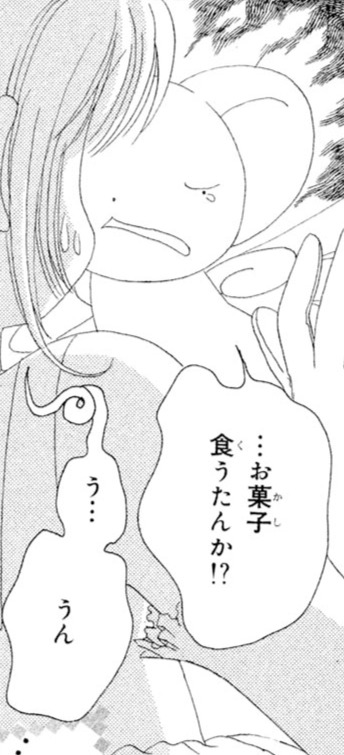
Kero joins Sakura at the spot where she sensed a Clow Card. Seeing Tomoyo and Li, Kero asks why Sakura called them first. Sakura explains she and Tomoyo had stopped by Li’s place, with Tomoyo adding that Sakura tried on a new outfit and they all had snacks.
- ケロ:
- 「…お菓子食うたんか!?」
- “…You ate snacks?!”
- 桜:
- 「う… うん」
- “Y... yeah.”
Key Points
1食うた is the Kansai past form of 食う
- It means “ate” here, corresponding to standard 食った.
- 食う is a casual word for “eat”. In くうた, the う sound is long where standard くった has a small っ.
2んか asks for confirmation
- The ん is shortened explanatory の, followed by the question particle か. 食うたんか corresponds to 食ったのか.
3お菓子 is the object, with を left out
- Restoring the particle gives お菓子を食うたんか. The snacks are what Sakura and the others ate.
Vocabulary
| Word | English | Meaning |
|---|---|---|
| お菓子 | Snacks | お菓子 is sweets and snacks such as candy, cookies, and chips. |
| 食う | To eat | 食う is a rough, casual word for “to eat”, used mostly by men. |
See Also
- Grammar: Grammar in the Kansai dialect
- Grammar: Past tense with 〜た・〜だ
- Grammar: Reasoning with 〜のだ
- Grammar: Marking the direct object with を
- Kanji: Childhood and small things with 子
- Kanji: Eating and food with 食
カードキャプターさくら © its respective creators. It is used here for educational commentary.