Because of that guy with 〜せいで
Grammar Explanation: Blame and credit with 〜せいで and 〜おかげで
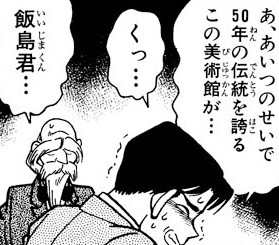
Ran, Conan, and Mouri are visiting an old art museum. Its new owner, Manaka, is closing it in ten days, and the director, Ochiai, explains that it will be torn down to build a hotel. The previous owner sold the museum on the promise that it would stay open, but Manaka announced the hotel plan as soon as he bought it. Iijima, a young staff member, mutters that it’s all Manaka’s fault.
- 飯島:
- 「あ、あいつのせいで50年の伝統を誇るこの美術館が…」
- “Because of th-that guy, this museum, with its proud fifty-year history…”
- 「くっ…」
- “Ngh…”
- 落合:
- 「飯島君…」
- “Iijima…”
Key Points
- 〜のせいで names the cause of a bad result and puts the blame on it. With a person before it, it says the trouble is their fault.
- あいつ is a rough way to say “that guy”. Calling the museum’s owner あいつ shows how much Iijima resents him.
- Iijima’s stammer, あ、あいつ, shows how upset he is.
- 誇る is “to take pride in” or “to boast”. 伝統を誇る describes something proud of its long tradition.
- The whole phrase 50年の伝統を誇る describes この美術館, “this museum”. The museum’s long history is what makes losing it so hard to take.
- が marks この美術館 as the subject, but Iijima never says what happens to it. The rest is clear from context: the museum is going to be torn down. Leaving it unsaid makes the line sound choked up.
- くっ… is a sound of frustration, like a sharp breath through clenched teeth.
- The director, Ochiai, answers with only Iijima’s name. 君 is a common way for a senior to address a younger man. Ochiai doesn’t argue with him.
Vocabulary
あいつ (That guy)
あいつ refers to a person who is not part of the conversation, or sometimes to a thing. It is casual and can sound rough or familiar.
誇る (To take pride in)
誇る means to take pride in something or to boast of it. 伝統を誇る describes a place or group proud of its long tradition.
この (This)
この means “this” or “these” and comes directly before a noun. It points to something near the speaker or something the speaker is referring to in the conversation.
美術館 (Art museum)
美術館 means an art museum, where artworks are displayed and preserved.
君 (You)
君 is a word for “you” used toward equals or people younger or of lower standing. It sounds gentle or poetic. Read くん, it is a suffix on names.
See Also
- Grammar: Blame and credit with 〜せいで and 〜おかげで