Bedridden while sick with 寝込む
Vocabulary Explanation: Words ending in 込む
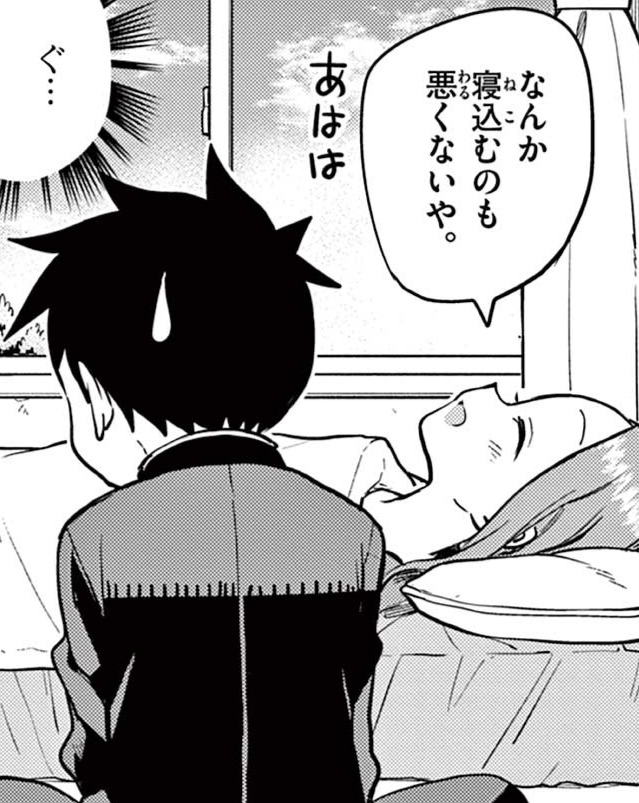
Takagi is home sick. Nishikata brings a printout from school to her room, and she asks him to stay. She thanks him for keeping her company.
- 高木:
- 「なんか寝込むのも悪くないや。」
- “Being stuck in bed like this isn't so bad after all.”
Key Points
1寝込む = “to be confined to bed”
- 寝る means “sleep” or “lie down.” 寝込む means remaining in bed for an extended period.
- Takagi missed school because she is ill, so you read 寝込む as “stay in bed with an illness.” In another context, it can describe falling into a deep sleep.
2寝込むのも = “even being stuck in bed”
- With の, Takagi treats 寝込む as an experience she can judge. も presents that experience as an unexpected case.
- 寝込むのも悪くない gives the core thought: “Even being stuck in bed isn’t so bad.”
3なんか and や keep the thought casual
- Sentence-initial なんか means “somehow” or “kind of” here. Takagi uses it to make the comment sound offhand while Nishikata keeps her company.
- Takagi ends with や to make the conclusion sound like a realization she is voicing to herself. The translator uses “after all” for that tone.
Vocabulary
悪い (Bad)
悪い means bad, wrong, or at fault. In conversation, it can also express an apology.
See Also
- Vocabulary: Words ending in 込む
からかい上手の高木さん © its respective creators. It is used here for educational commentary.