Besides, it's just practice with それに〜
Grammar Explanation: In addition to with それに〜
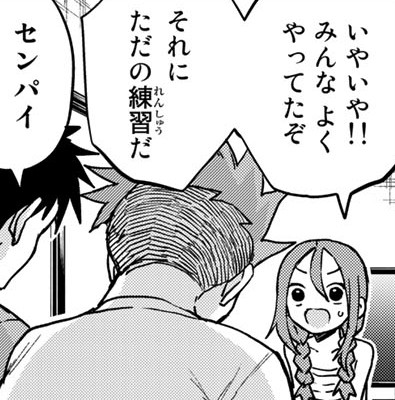
Urushi plays three shogi games at once against the other members of the shogi club. After she wins all three, she worries she has hurt their confidence right before the upcoming tournament.
- うるし:
- 「いやいや!!みんなよくやってたぞ」
- “No, no! You guys did great!”
- Literal: “No, no! Everyone was doing well.”
- 「それにただの練習だ」
- “Besides, it's just practice.”
- Literal: “Besides, it is only practice.”
Key Points
1それに adds another reassuring reason
- Urushi first praises the club members’ play, then uses それに to add that the loss does not count for much because it was only practice.
2ただの練習だ softens the loss
- ただの means “nothing more than” or “just”, downplaying the match as practice.
- The plain だ keeps the reassurance direct and casual.
Vocabulary
| Word | English | Meaning |
|---|---|---|
| みんな | Everyone | みんな means all the people in a group, or everything. It is also written 皆. |
| よく | Often | よく means something happens often. It also means “well” or “skillfully”. Before 〜ね, it can show admiration or surprise. |
| やる | To do | やる is a casual word for “to do”. It also means to give something to someone of lower standing, or to animals and plants. |
| ただ | Just | ただ describes something ordinary or nothing more than it is: “just” or “only”. It also means “free of charge”, often written タダ. |
| 練習 | Practice | 練習 means practice or rehearsal done to improve a skill or performance. |
See Also
- Grammar: In addition to with それに〜
- Grammar: Past tense with 〜た・〜だ
- Grammar: The copula だ
- Grammar: Rough declarations with ぞ and ぜ
それでも歩は寄せてくる © its respective creators. It is used here for educational commentary.