Call me Hinagiku with 〜の事は〜って呼ぶ
Grammar Explanation: Referring to a person with 〜のこと
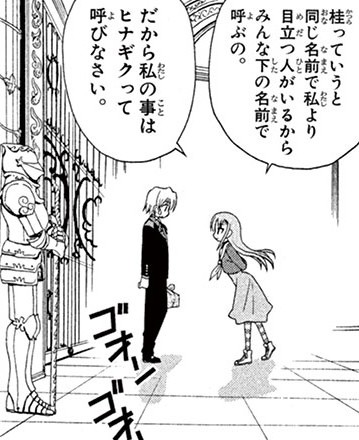
Hayate helped Hinagiku, the student council president, rescue a baby bird. As thanks, she took him to the top of the clock tower, where the council room is. When he politely brushed off her hint that he’d be back, calling her “Katsura-san”, she told him to call her Hinagiku instead, which left him puzzled.
- ヒナギク:
- 「桂っていうと同じ名前で私より目立つ人がいるから みんな下の名前で呼ぶの。」
- “There's someone else named Katsura who stands out more than I do, so everyone calls me by my first name.”
- Literal: “When you say 'Katsura', there's a person with the same name who stands out more than me, so everyone calls me by my given name.”
- 「だから私の事はヒナギクって呼びなさい。」
- “So call me Hinagiku.”
Key Points
- XのことをYと呼ぶ means “call X Y”. Here って is a casual と, and の事 is のこと written in kanji.
- は replaces を, making “me” the topic: “as for me, call me Hinagiku”.
- 〜なさい is a firm instruction, the kind a parent, teacher, or someone in charge uses. It suits the student council president.
- っていうと means “when you say” or “speaking of”. 下の名前 is a given name.
- The other Katsura who stands out is her older sister, Katsura-sensei, who teaches at the school.
Vocabulary
同じ (Same)
同じ describes things that are identical, or one and the same.
名前 (Name)
名前 means a name, the word used to identify a person or thing.
私 (I)
私 means “I” or “me”. It is the standard first-person pronoun in polite speech and is also common in casual speech among women.
目立つ (To stand out)
目立つ is to be noticeable or stand out from the people or things around.
人 (Person)
人 is a person, or people in general. It also means other people.
いる (To be)
いる is to exist or be somewhere, for people and animals. After a て-form verb, it shows an ongoing action or a continuing state.
みんな (Everyone)
みんな means all the people in a group, or everything. It is also written 皆.
下の名前 (Given name)
下の名前 is a person’s given name, as opposed to the family name, which comes first in Japanese.
呼ぶ (To call)
呼ぶ is to call out to someone, call someone over, or call something by a name.
事 (Thing)
事 is an abstract thing, matter, or fact. It also turns a verb phrase into a noun, as in 見た事がある. It is often written こと.
See Also
- Grammar: Referring to a person with 〜のこと
- Grammar: Quoting and reporting with と and って
- Grammar: Marking the topic with は and も
- Kanji: Below and lowering with 下
- Kanji: Matters and events with 事
- Kanji: People and persons with 人
- Kanji: Privacy and self with 私