Call me Teacher with と呼べ
Grammar Explanation: Quoting and reporting with と and って
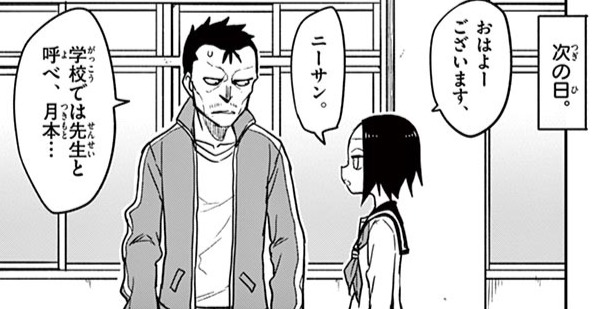
Sanae’s teacher, Mr. Tanabe, has proposed to her older sister, who is also a teacher at the school.
- 「次の日。」
- “The following day.”
- サナエ:
- 「おはよーございます、ニーサン。」
- “Good morning, Big Brother.”
- 田辺:
- 「学校では先生と呼べ、月本…」
- “Call me 'Teacher' at school, Tsukimoto.”
- Literal: “At school, call me Teacher, Tsukimoto...”
Key Points
1先生と呼べ = call me “Teacher”
- Here と marks the title being quoted: 先生 is what Tanabe says Sanae should call him.
- 呼ぶ means “to call someone”; with と, it works like “call someone X”.
2The command form 呼べ
- 呼べ is the plain imperative of 呼ぶ.
3学校では limits the rule to school
- 学校では means “at school” and sets the context for the command.
- The は adds contrast: whatever she calls him elsewhere, at school he wants the proper title 先生.
Vocabulary
次 (Next)
次 is the next one in order.
日 (Day)
日 is a day. It also means the sun or sunlight.
学校 (School)
学校 means a school, where teachers provide organized instruction to students.
先生 (Teacher)
先生 is a respectful title for teachers and certain professionals, including doctors, lawyers, and politicians. Speakers do not normally use it for themselves.
呼ぶ (To call)
呼ぶ is to call out to someone, call someone over, or call something by a name.
See Also
- Grammar: Quoting and reporting with と and って
- Grammar: The plain imperative
- Grammar: Marking the topic with は and も
- Grammar: Consonant doubling with 促音
- Kanji: Learning and schooling with 学
- Kanji: Schools and checking with 校
からかい上手の高木さん © its respective creators. It is used here for educational commentary.