Cause of incidents in the pool with 原因
Kanji Explanation: Causes and dependence with 因
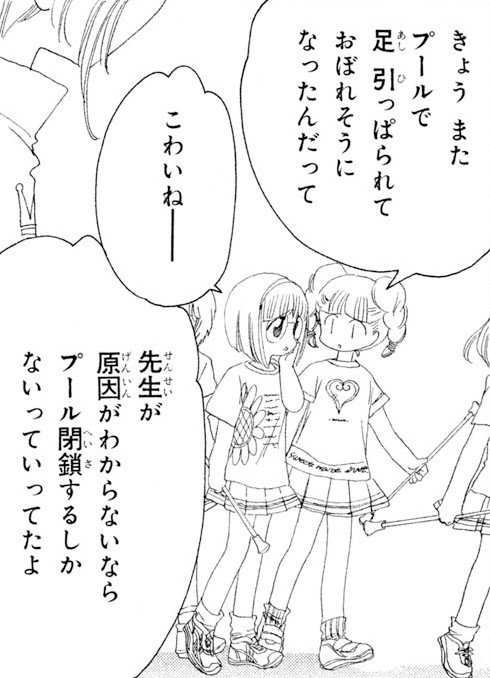
After cheerleading practice, Sakura overhears her friends talking about incidents at the school pool, where Sakura and Chiharu were among those mysteriously pulled underwater.
- 千春:
- 「きょう また プールで足 引っぱられておぼれそうになったんだって」
- “I heard that today, someone got dragged under the water at the pool and almost drowned again.”
- 奈緒子:
- 「こわいねーーー」
- “That's scary!”
- 千春:
- 「先生が原因がわからないならプール閉鎖するしかないっていってたよ」
- “The teacher said that if they can't figure out the cause, they'll have no choice but to close the pool.”
- Literal: “The teacher said that if the cause isn't known, there's no choice but to close the pool.”
Key Points
1原因 = “cause” behind a problem
- Here 原因 means the cause of the pool incidents, explaining why students keep getting pulled underwater.
2原因がわからないなら = if the cause is unknown
- 原因がわからない literally says “the cause is not known”.
- The English translation makes the implied investigators explicit as “they can’t figure out the caused”.
3Two different が markers
- In 先生が…っていってた, the first が marks the teacher as the one who said it.
- In 原因がわからない, the second が marks 原因 as what is unknown.
4閉鎖するしかない = have no choice but to close
- プール閉鎖する is “to close the pool”, using 閉鎖 with する as a verb.
- 〜するしかない means there is no option except doing that action.
5Casual reported speech with っていってた
- っていってた is casual と言っていた, reporting what the teacher said.
Vocabulary
足 (Foot)
足 means foot or leg.
先生 (Teacher)
先生 is a respectful title for teachers and certain professionals, including doctors, lawyers, and politicians. Speakers do not normally use it for themselves.
原因 (Cause)
原因 means the cause of a result or condition, often a problem, accident, or failure.
閉鎖 (Closure)
閉鎖 means closing a place to entry or shutting down an organization or facility.
言う (To say)
言う means to say or tell. It can also mean to call something by a particular name.
See Also
- Kanji: Causes and dependence with 因
- Future entry: Past tense with 〜た・〜だ
- Grammar: Marking the subject with が
- Grammar: If that's the case with なら
カードキャプターさくら © its respective creators. It is used here for educational commentary.