Chinese history lesson on talismans with 中国
Kanji Explanation: Countries and realms with 国
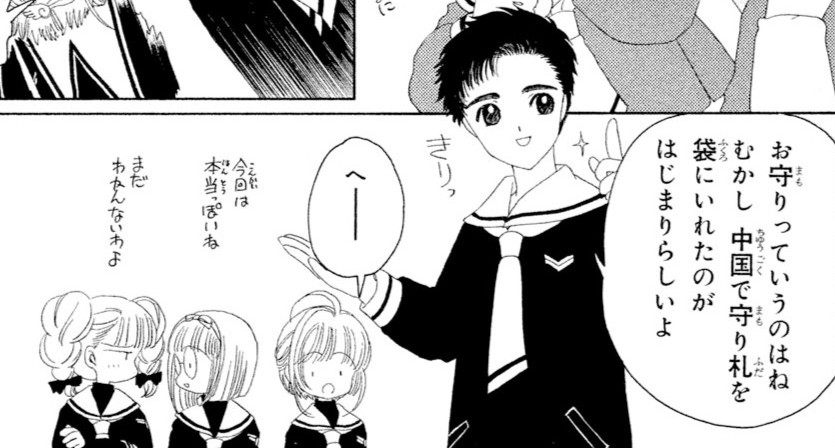
Sakura had to take a detour to get to class. She tells her friends at school about the shrine she saw along the way. Naoko says the talismans from there are popular, as they can grant wishes for things such as exams and romance.
- 山崎:
- 「お守りっていうのはね むかし 中国で守り札を袋にいれたのがはじまりらしいよ」
- “You know, apparently good-luck charms began long ago in China, when people put protective talismans into bags.”
- 奈緒子:
- 「今回は本当っぽいね」
- “This time it sounds true, huh?”
- 千春:
- 「まだ わかんないわよ」
- “We don't know that yet!”
Key Points
1中国で places the story in China
- 中国 means China here. The particle で marks where people put the talismans into bags.
2お守りっていうのは introduces the thing being explained
- っていうのは is a casual form of というのは. Here it introduces an explanation of how good-luck charms began.
- The ね after は invites the listeners’ attention before Yamazaki continues.
3いれたのがはじまり identifies the origin
- In 守り札を袋にいれた, を marks what people put in, and に marks where they put it.
- の turns the whole past-tense clause into a noun phrase. That act of putting talismans into bags is what Yamazaki calls the beginning.
- らしい presents the story as something he has heard or learned. He is reporting an apparent origin, and よ presents it as information for his listeners.
4今回は本当っぽいね gives a tentative reaction
- 本当っぽい means it sounds or seems true. Naoko is judging how believable the story is.
- 今回は singles out this time, suggesting that she has doubted other stories. ね invites agreement.
5まだわかんないわよ pushes back
- わかんない contracts わからない. With まだ, it means they do not know yet whether the story is true.
- Chiharu’s わよ gives her reply an assertive, feminine tone. She cautions Naoko against accepting the story too soon.
Vocabulary
中国 (China)
中国 is the name China, historically “the central state” or “middle kingdom”.
本当 (Truth)
本当 means truth, real, or really.
See Also
- Kanji: Countries and realms with 国
- Grammar: Conjecture with 〜らしい
- Grammar: Contracting 〜らない to 〜んない
- Kanji: Now and the present with 今
- Kanji: Origins and main things with 本
カードキャプターさくら © its respective creators. It is used here for educational commentary.