Clearing out a room with 〜ておく
Grammar Explanation: Doing in advance with 〜ておく
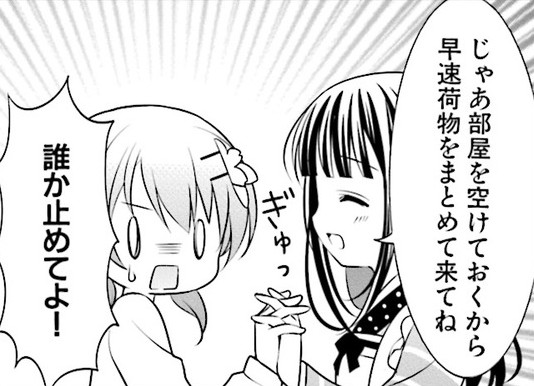
After Cocoa suggests if she were staying at Chiya’s place rather than Chino’s, that she’d be working for Chiya’s family’s tea house, Chiya takes to the idea.
- 千夜:
- 「じゃあ部屋を空けておくから早速荷物をまとめて来てね」
- “Then I'll clear out a room in advance, so go gather your things and come right away.”
- Literal: “Then I'll open up a room and leave it done, so gather your things and come right away.”
- ココア:
- 「誰か止めてよ!」
- “Somebody stop her!”
Key Points
1空けておく means clearing a room and keeping it available
- Chiya proposes preparing the room before Cocoa arrives with her belongings.
2ておく preserves the useful result
- The room will remain open after Chiya clears it, so the preparation is ready for the imagined move.
3から links the preparation to Chiya’s command
- Chiya says she will prepare the room, から, so Cocoa should gather her things and come at once.
Vocabulary
| Word | English | Meaning |
|---|---|---|
| 部屋 | Room | 部屋 means a room separated from other spaces in a building. |
| 空ける | To clear out | 空ける is to empty a space, or to make room or time for something. |
| 早速 | Promptly | 早速 describes doing something right away, without delay. |
| 荷物 | Luggage | 荷物 means luggage, a package, or another load being carried. Figuratively, it can mean a burden. |
| 来る | To come | 来る means to come or move toward the speaker or the place being discussed. |
| 誰か | Someone | 誰か is some person who is not named or not known. |
| 止める | To stop | 止める is to stop something moving or happening. Read やめる, it means to quit doing something. |
See Also
- Grammar: Doing in advance with 〜ておく
- Grammar: Connecting actions with 〜て・〜で
- Future entry: Transitivity in Japanese
- Grammar: Informing with よ
- Grammar: Seeking agreement with ね
- Grammar: Consonant doubling with 促音
- Grammar: Coming and going with 〜てくる and 〜ていく
- Kanji: Sections and departments with 部
- Kanji: Shelter and shops with 屋
- Kanji: Things and kinds with 物
ご注文はうさぎですか? © its respective creators. It is used here for educational commentary.