Consult us first with 相談
Kanji Explanation: Mutuality and appearance with 相
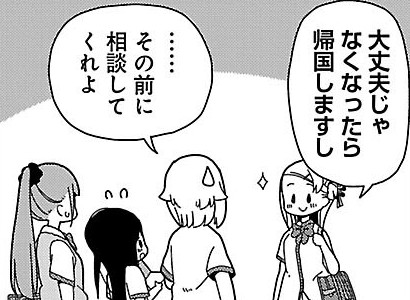
While staying in Japan, Sotoka lives alone in the apartment building her parents own. Aru asks if Sotoka isn’t lonely living alone, but Sotoka says it’s all right.
- ソトカ:
- 「大丈夫じゃなくなったら帰国しますし」
- “If it gets bad, I'll return to my home country.”
- Literal: “If it stops being okay, I'll return to my home country, and...”
- なこ:
- 「……その前に相談してくれよ」
- “Before that, consult us first!”
- Literal: “Before that, consult us.”
Key Points
- 相談する means to consult someone, talk something over, or ask for advice.
- その refers to the action Sotoka just mentioned: going back to her home country.
- 〜てくれ is a plain request form, often direct or rough depending on the relationship.
- The final よ adds emotional insistence, showing Nako’s concern rather than cold command.
Vocabulary
| Word | English | Meaning |
|---|---|---|
| 大丈夫 | All right | 大丈夫 describes being all right, with nothing to worry about. People use it to reassure others, or to politely say “no thanks”. |
| じゃない | Isn't | じゃない is the casual negative of だ: “is not”. With a rising tone, it asks for agreement: “isn’t it?” |
| 帰国 | Returning to one's country | 帰国 means returning to one’s home country from abroad. |
| その | That | その points to something near the listener or to something just mentioned. Said alone, it fills a pause, like “um”. |
| 前 | Front | 前 is the front of something. It also means an earlier time, as in 三年前, “three years ago”. |
| 相談 | Consultation | 相談 means consulting someone or discussing a problem to seek advice and decide what to do. |
See Also
- Kanji: Mutuality and appearance with 相
- Grammar: Receiving kindness with 〜てくれる
- Grammar: The plain imperative
- Grammar: Informing with よ
- Grammar: Becoming with 〜くなる and 〜になる
- Kanji: Countries and realms with 国