Did you come to get me with 〜んです
Grammar Explanation: Reasoning with 〜のだ
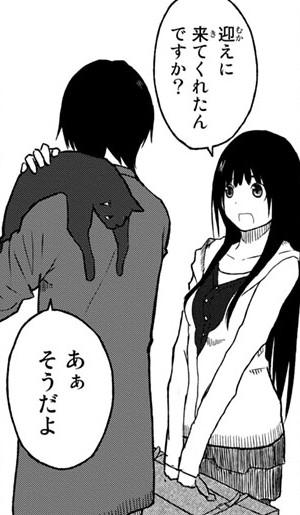
After getting off the intercity bus, Makoto is greeted by her cousin Kei.
- 真琴:
- 「迎えに来てくれたんですか?」
- “Did you come to get me?”
- Literal: “Is it that you came to get me?”
- 圭:
- 「あぁ そうだよ」
- “Yeah, that's right.”
Makoto’s incomplete observation is that her cousin is at the bus stop. The part she is unaware of is why he is there. She comes up with the most obvious reason, that Kei came to the bus stop to get her and show her to his house where she will be staying.
There was never an exchange where Makoto asks why Kei is there. Asking if it’s the case that he’s picking her up implies that she’s inquiring as to the reason why he’s there.
Key Points
1来てくれたんですか asks for an explanatory reason
- 迎えに来てくれた means Kei came to pick Makoto up for her benefit.
- んですか asks whether that is the explanation for his being there.
2迎えに来る is purpose plus movement
- 迎え is the purpose: meeting or picking someone up.
- に来る means to come for that purpose.
Vocabulary
| Word | English | Meaning |
|---|---|---|
| 迎える | To meet | 迎える is to go and meet someone who is arriving. 迎えに来る means to come pick someone up. |
| 来る | To come | 来る means to come or move toward the speaker or the place being discussed. |
See Also
- Grammar: Reasoning with 〜のだ
- Grammar: Past tense with 〜た・〜だ
- Grammar: Receiving kindness with 〜てくれる
- Grammar: Coming to for a purpose with 〜に来る
- Grammar: Informing with よ
ふらいんぐうぃっち © its respective creators. It is used here for educational commentary.