Difficult to say with 〜づらい
Grammar Explanation: Difficult to do with 〜づらい
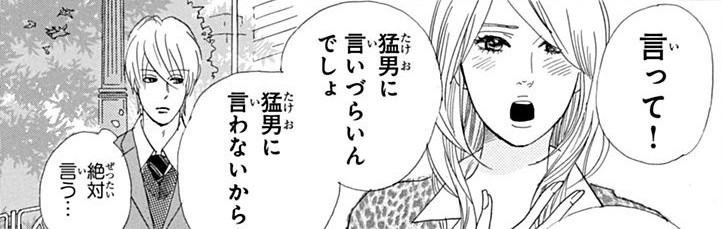
Takeo feels Rinko is keeping something from him, but can’t figure out what. Makoto and Ai meet with Rinko to confront her about it.
- 愛:
- 「言って! 猛男に言づらいんでしょ? 猛男に言わないから!」
- “Tell me! It's difficult to say to Takeo, right? But I won't tell Takeo!”
- Literal: “Say it! It's difficult to say to Takeo, right? I won't say it to Takeo!”
- 誠:
- 「絶対言う…」
- “She'll definitely tell him...”
Key Points
1言いづらい = “difficult to say”
- 〜づらい attaches to the verb stem to express difficulty: Verb stem + づらい “difficult to [verb]”.
- Pattern: 言う to 言い (stem) + づらい becomes 言いづらい “difficult to say”.
- The difficulty here is psychological/emotional (not physical inability).
2Contraction: 言いづらいんでしょ
- んでしょ is casual speech for のでしょう (seeking confirmation: “right?”, “isn’t it?”)
- Full form would be: 猛男に言いづらいのでしょう? “It’s difficult to say to Takeo, right?”
- This makes Ai’s question more direct and empathetic.
3から at the end = reassurance
- 猛男に言わないから is short for 猛男に言わないからね/から大丈夫 “I won’t tell Takeo, so (it’s okay).”
- The から at sentence-end provides a reason/reassurance, with the conclusion left implied.
- This pattern shows Ai trying to create a safe space for Rinko to open up.
Vocabulary
言う (To say)
言う means to say or tell. It can also mean to call something by a particular name.
絶対 (Absolute)
絶対 means absolute or unconditional. As an adverb, it means definitely or under no circumstances, depending on the sentence.
See Also
- Grammar: Difficult to do with 〜づらい
- Grammar: Reasoning with 〜のだ
- Future entry: Because with 〜から
俺物語!! © its respective creators. It is used here for educational commentary.