Do you remember me with 〜のこと覚えてる
Grammar Explanation: Referring to a person with 〜のこと
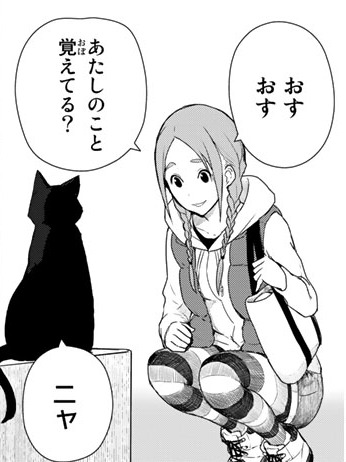
Nao has stopped by the Kowata house. At the gate, the family’s black cat greets her with a meow.
- なお:
- 「おすおす」
- “Hey there.”
- 「あたしのこと覚えてる?」
- “Do you remember me?”
- チト:
- 「ニャ」
- “Mew.”
Key Points
1あたしのこと覚えてる?
- のこと after あたし makes Nao the person being remembered.
- 覚える works with or without のこと: あたしを覚えてる? is also correct. With verbs of memory, though, the のこと version often sounds more natural in conversation.
- The full form is あたしのことを覚えている? In casual speech the を drops.
2覚えてる means “remember”
- 覚える is “to commit to memory”. 覚えている is the state that follows, “to have in memory”, so it means “remember” in English.
- 覚えてる is the casual form, with the い of ている dropped.
3おすおす
- おす is a casual greeting, like おっす. Doubling it makes it sound friendly and playful.
Vocabulary
あたし (I)
あたし means “I” or “me”. It is a casual, feminine form of 私.
こと (Thing)
こと is an abstract thing, matter, or fact, as opposed to a physical object. It also turns a verb phrase into a noun, as in 見たことがある. It is also written 事.
覚える (To remember)
覚える is to learn and keep something in memory.
See Also
ふらいんぐうぃっち © its respective creators. It is used here for educational commentary.