Doing nothing but sleep in class with 〜てばかり
Grammar Explanation: Nothing but with 〜ばかり
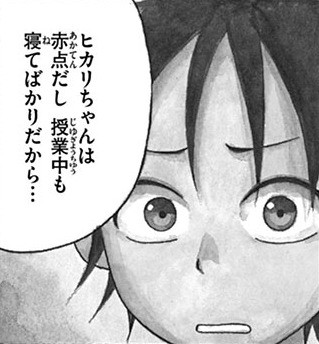
Hibino has kept Hikari and Kenji after school for extra study. Hikari is upset to be stuck with Kenji and points out that makeup classes are usually for students in the same year. Hibino explains that Kenji didn’t fail, but his scores are always just barely passing.
- 日々野:
- 「ヒカリちゃんは赤点だし 授業中も寝てばかりだから…」
- “Hikari-chan, you got a failing grade, and in class you do nothing but sleep, so...”
Key Points
1寝てばかり, nothing but sleeping
- The て-form 寝て plus ばかり says sleeping is all Hikari does in class. The full form is 寝てばかりいる. In speech, いる often drops and だ takes its place, giving 寝てばかりだ.
- ばかり often sounds critical. Hibino isn’t scolding Hikari, but she presents the sleeping as a problem that explains the extra session.
- Don’t confuse it with 寝たばかり, “just fell asleep”. The た-form gives the “just happened” meaning. The て-form gives “nothing but”.
2赤点だし, giving a reason with し
- 赤点 is a failing grade on a test. The name comes from teachers marking failing scores in red.
- し after 赤点だ lists one reason and leaves room for more. The second reason follows: she sleeps in class too.
3授業中も, in class as well
- 中 after a noun means “during” or “in the middle of”. 授業中 is “during class”.
- も adds this to the failing grade: on top of failing, she also sleeps in class.
4だから…, a reason without the conclusion
- から marks everything before it as the reason. Hibino stops there and leaves out the obvious result: “so that’s why you’re here”.
- Hibino uses Hikari’s name where English would say “you”, which is common in Japanese.
Vocabulary
授業中 (During class)
授業中 means while a class is in session, as in sleeping or talking during a lesson.
寝る (To sleep)
寝る is to lie down and sleep, or to go to bed.
See Also
- Grammar: Nothing but with 〜ばかり
- Grammar: Because with 〜から
- Grammar: Marking the topic with は and も
- Kanji: Work and vocation with 業
ふだつきのキョーコちゃん © its respective creators. It is used here for educational commentary.