Don't be modest with 謙遜
Kanji Explanation: Humility and modesty with 謙
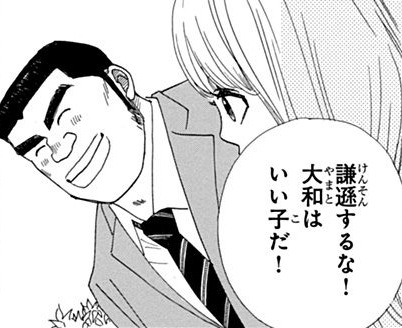
Sunakawa’s older sister couldn’t believe Takeo had a girlfriend and insisted on meeting her. Yamato brings cookies she baked and offers the sister some. When Takeo and the sister call her a good girl, Yamato waves the praise away and says she isn’t a good girl at all.
- 猛男:
- 「謙遜するな! 大和はいい子だ!」
- “Don't be so modest! Yamato, you're a good girl!”
Key Points
1謙遜 means modesty
- 謙遜 is modest behavior, such as playing down your own abilities or turning aside a compliment. With する it becomes a verb, 謙遜する, to be modest about something.
- Japanese manners expect a person to deny praise politely, as Yamato does with いい子なんかじゃないです. Takeo doesn’t treat it as politeness. He believes she means it and argues with her.
- Compare 謙虚. 謙虚 describes a humble attitude or character, while 謙遜 is the act of being modest, often in what someone says.
2Telling someone not to with 〜するな
- な after the dictionary form of a verb makes a blunt prohibition: 謙遜する → 謙遜するな, “don’t be modest”.
- Takeo’s loud, simple speech makes this sound like encouragement, not a scolding.
3Calling someone by name
- Takeo says 大和は instead of あなたは while talking to Yamato. Japanese speakers often use a person’s name where English uses “you”.
Vocabulary
| Word | English | Meaning |
|---|---|---|
| する | To do | する is to do or perform something. It also turns many nouns into verbs, as in 勉強する. |
| いい子 | Good kid | いい子 is a well-behaved or kind-hearted child, or a nice, good-natured young person. Adults also use it as praise, as in “good girl” or “good boy”. |
See Also
- Kanji: Humility and modesty with 謙
- Grammar: The prohibitive な
- Kanji: Childhood and small things with 子
俺物語!! © its respective creators. It is used here for educational commentary.