Don't care if it troubles you with 知ったことか
Grammar Explanation: Lack of interest with 知ったことか
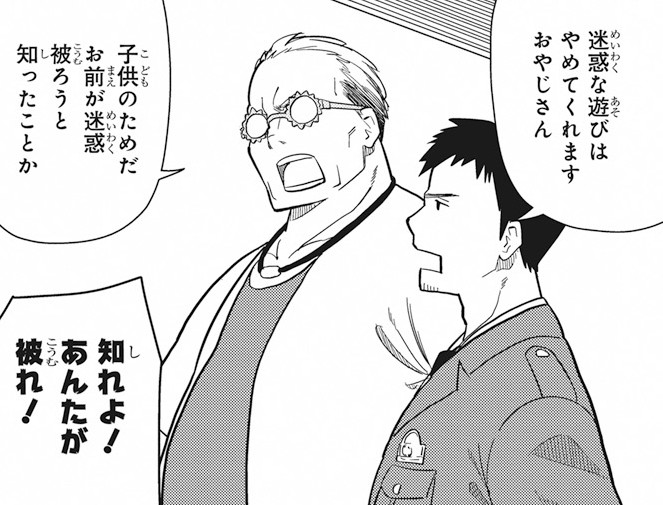
Oyaji presented Colors with a bomb to defuse via a riddle, which led to problems for Officer Saitou. After Colors successfully defuses the bomb, Saitou tells Oyaji to stop playing bothersome games.
- おやじ:
- 「子供のためだ。お前が迷惑被ろうと知ったことか」
- “It's for the kids. I don't care if it will cause you trouble.”
- Literal: “It's for the kids. Whether you suffer trouble or not, is that something I know?”
Key Points
- The idiom means “what do I care?” or “that is none of my concern”.
- Oyaji uses it about whether Saitou is inconvenienced.
- 迷惑被る means to be subjected to nuisance or trouble.
- 〜うと sets up a concessive “even if”.
Vocabulary
| Word | English | Meaning |
|---|---|---|
| 子供 | Child | 子供 is the everyday word for a child. It can also refer to children as a group. |
| ため | For | ため is the purpose or benefit of something: 〜のため means “for the sake of” or “in order to”. It can also give a cause: “because of”. It is also written 為. |
| お前 | You | お前 is a casual, rough word for “you”. Men often use it toward people of equal or lower standing. |
| 迷惑 | Trouble | 迷惑 means trouble, annoyance, or inconvenience caused to someone else. |
| 被る | To suffer | 被る is to suffer damage or trouble. Read かぶる, it means to put on a hat or cover oneself. |
| 知る | To know | 知る means to learn or come to know a fact or person. In the form 知っている, it describes already knowing. |
| こと | Thing | こと is an abstract thing, matter, or fact, as opposed to a physical object. It also turns a verb phrase into a noun, as in 見たことがある. It is also written 事. |
See Also
- Grammar: Lack of interest with 知ったことか
- Grammar: Volitional with 〜う・〜よう
- Grammar: Purpose and cause with 〜ために
- Kanji: Childhood and small things with 子