Don't know with わかんない
Grammar Explanation: Contracting 〜らない to 〜んない
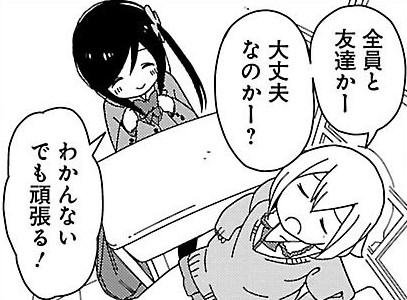
Nako learns of Bocchi’s necessity to become friends with everyone in class.
- なこ:
- 「全員と友達かー」
- “Friends with the whole class, huh?”
- 「大丈夫なのかー?」
- “Will you be okay...?”
- ぼっち:
- 「わかんないでも頑張る!」
- “I don't know, but I'll try my best!”
- Literal: “I don't know, but I'll do my best!”
わからない contracts here to わかんない.
Key Points
1わかんない = わからない (casual contraction)
- わかんない is a casual spoken contraction of わからない (“I don’t know / I’m not sure”).
- In more neutral speech you’d usually say わからない.
2「わかんないでも頑張る」= “I don’t know, but I’ll try”
- でも here works like “but / even so”, connecting the uncertainty to the decision to act.
Vocabulary
全員 (Everyone)
全員 means everyone or every member of a group, without exception.
友達 (Friend)
友達 means a friend or companion. Despite the suffix 達, it can refer to either one friend or several friends.
大丈夫 (All right)
大丈夫 means all right, okay, safe, or no problem. It is a common word of reassurance.
See Also
- Grammar: Contracting 〜らない to 〜んない
- Kanji: Reaching and attaining with 達
- Kanji: Wholeness and completion with 全
ひとりぼっちの○○生活 © its respective creators. It is used here for educational commentary.