Don't make me laugh with 笑わせんな
Grammar Explanation: Making and letting with 〜せる・〜させる
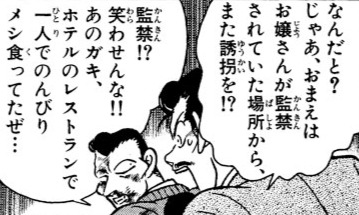
Ran and Kogoro find the kidnapped Akiko and they apprehend the kidnapper. Believing the butler to have arranged the kidnapping, Kogoro accuses the kidnapper being an accomplice. The kidnapper denies working with someone, saying he encountered the child in the hotel by chance.
- 小五郎:
- 「なんだと?じゃあ、おまえはお嬢さんが監禁されていた場所から、また誘拐を!?」
- “What?! So you kidnapped her all over again, from the very place where the young lady was being held captive!?”
- 誘拐犯:
- 「監禁!?笑わせんな!!あのガキ、ホテルのレストランで一人でのんびりメシ食ってたぜ…」
- “Held captive?! Don't make me laugh!! That brat was eating a leisurely meal all by herself in the hotel restaurant...”
Key Points
- The chain: 笑う (laugh) → 笑わせる, the causative (make someone laugh) → 笑わせるな with the prohibitive な.
- 笑わせんな squeezes 笑わせるな.
- The prohibitive な is already blunt. Contracting it makes the retort rougher still.
- ガキ is a rude word for a kid, far harsher than 子供.
- The particle is omitted: the full thought is あのガキは…メシ食ってた.
- メシ is a rough word for a meal, and 食う is a rough verb for eating.
- 食ってた contracts 食っていた, the past progressive, was eating.
- ぜ ends the line with rough masculine force.
Vocabulary
監禁 (Confinement)
監禁 refers to the act of confining a person to a specific location or area and depriving them of the freedom to leave or move about.
場所 (Place)
場所 means a place, location, or space where something is or happens.
誘拐 (Kidnapping)
誘拐 means kidnapping someone by deception or enticement.
あの (That)
あの comes before a noun to mean “that” or “those”. It points to someone or something away from both speakers, or something they both know about.
See Also
- Grammar: Making and letting with 〜せる・〜させる
- Grammar: The prohibitive な
- Grammar: Contracting 〜る+な to 〜んな
- Future entry: Rough declarations with ぞ and ぜ
- Grammar: Receptive verbs with 〜れる
- Kanji: Abduction and taking away with 拐