Don't want you to misunderstand with 〜ないでほしい
Grammar Explanation: Want you to do something with 〜てほしい
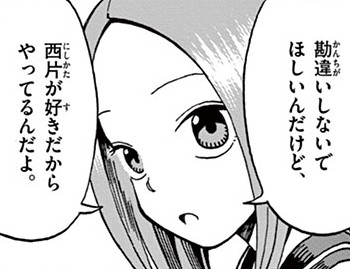
After failing to trick Nishikata with a prank, Takagi asks him if he doesn’t like her teasing him.
- 高木:
- 「勘違いしないでほしいんだけど、西片が好きだからやってるんだよ。」
- “I don't want you to misunderstand. It's because I like you that I do it.”
- Literal: “I want you not to misunderstand, but I do it because I like you, Nishikata.”
Key Points
1〜ないでほしい = I don’t want you to…
- This is the negative て-form pattern used to express a hoped-for non-action.
- Here Takagi means she does not want Nishikata to misunderstand her teasing.
2勘違いしないでほしい
- The verb is 勘違いする, “to misunderstand”.
- So the phrase means “I don’t want you to get the wrong idea.”
3んだけど softens the lead-in
- 「ないでほしいんだけど」 sounds gentler than a blunt command.
- It works as a soft setup before she explains her real reason.
Vocabulary
| Word | English | Meaning |
|---|---|---|
| 勘違い | Misunderstanding | 勘違い is a mistaken belief, thinking something is true when it is not. |
| ほしい | Want | ほしい describes wanting something. After a て-form verb, it means wanting someone else to do something. It is also written 欲しい. |
| 好き | Liked | 好き describes something you like or someone you love. |
| やる | To do | やる is a casual word for “to do”. It also means to give something to someone of lower standing, or to animals and plants. |
See Also
- Grammar: Want you to do something with 〜てほしい
- Grammar: Negation with 〜ない
- Grammar: Marking the subject with が
- Grammar: Informing with よ
- Grammar: But with 〜けど and 〜けれど
からかい上手の高木さん © its respective creators. It is used here for educational commentary.