Don't worry with すんな
Grammar Explanation: Contracting 〜る+な to 〜んな
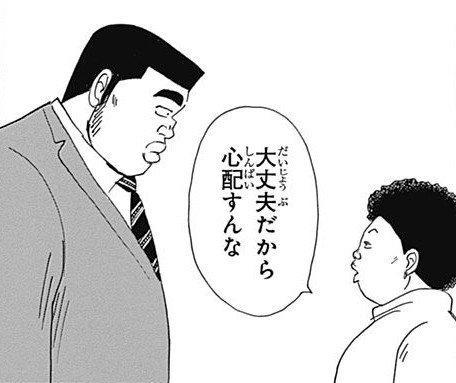
Takeo takes his pregnant mother to the hospital, as she’s getting close to delivery. Once there, she gives Takeo and his friend Suna a list of things to take care of during her stay.
- 母さん:
- 「大丈夫から心配すんな」
- “I'll be fine, so don't worry.”
- Literal: “Because I'll be okay, don't worry.”
Key Points
1すんな = contraction of するな (“don’t do”)
- すんな is a casual spoken contraction of するな (the prohibitive form: “don’t do X”).
- The full form here would be: 心配するな “Don’t worry”
- Pattern: 〜る + な becomes 〜んな (drop る, add んな)
2Why this contraction sounds casual
- The prohibitive な itself is already informal/casual (more direct than ないで).
- The contraction 〜んな makes it even more colloquial and abrupt.
- This is common in everyday speech, especially among family or close friends.
3心配する = “to worry”
- 心配 means “worry” or “concern” (noun).
- 心配する turns it into a verb: “to worry”.
- Other examples: 勉強する (“to study”), 準備する (“to prepare”).
4から adds reasoning
- 大丈夫だから = “because I’ll be fine”
- The から connects the reason to the command that follows
- “I’ll be fine, so (therefore) don’t worry.”
Vocabulary
大丈夫 (All right)
大丈夫 means all right, okay, safe, or no problem. It is a common word of reassurance.
心配 (Worry)
心配 means worry, concern, or anxiety about what might go wrong. With する, it means “to worry”.
See Also
- Grammar: Contracting 〜る+な to 〜んな
- Grammar: The prohibitive な
- Future entry: Because with 〜から
- Kanji: Distribution and arrangement with 配
俺物語!! © its respective creators. It is used here for educational commentary.