Embarrassing to say out loud with いざ口にすると
Grammar Explanation: When the time comes with いざ〜となると
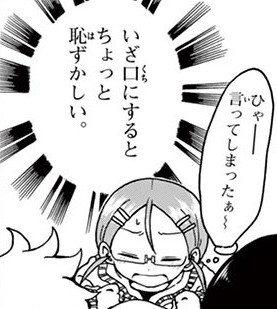
Yukari is having a sleepover with Mina and Sanae and wants them to stay up talking like on a school trip. When Sanae says she came prepared, Yukari hopes for love stories, but Sanae tells a ghost story instead. Fed up, Yukari blurts out that they should be talking about crushes.
- ユカリ:
- 「ひゃー 言ってしまったぁ〜」
- “Eek! I went and said it~”
- 「いざ口にするとちょっと恥ずかしい。」
- “Now that I've actually said it out loud, it's kind of embarrassing.”
- Literal: “When (I) actually put (it) to mouth, (it's) a little embarrassing.”
Key Points
- いざ stresses that this is for real. Wanting love talk in her head was one thing, but saying it in front of her friends is another.
- と links the action to what she feels once it happens. いざ often comes before a と or たら clause like this, telling how things felt once the moment arrived.
- Compare いざ言うとなると, “when it actually comes to saying it”. That looks at the point just before acting. Yukari has already spoken, so the plain と fits.
- 口にする means putting something into words, especially something you had kept to yourself. It can also mean “eat”, but that sense doesn’t fit here.
- てしまう marks something done that can’t be taken back. With ひゃー and the drawn-out ぁ〜, Yukari sounds half thrilled, half mortified.
- ちょっと means “a little”. Her face says she is more than a little embarrassed, so “kind of” fits the tone.
Vocabulary
いざ (Actually, for real)
いざ marks the moment something stops being a plan and has to be done for real, as in いざ買うとなると, “when it actually comes to buying”. On its own, it’s an old-fashioned “Now then!” said before starting something.
口にする (To say out loud)
口にする is to put something into words, often something you had kept to yourself. It can also mean to eat or drink something.
ちょっと (A little)
ちょっと describes a small amount or a short time. It also softens a refusal, or calls someone’s attention, like “hey”.
恥ずかしい (Embarrassing)
恥ずかしい describes feeling embarrassed, shy, or ashamed, or something that makes you feel that way.
言う (To say)
言う means to say or tell. It can also mean to call something by a particular name.
しまう (To put away)
しまう is to put something back where it belongs. After a て-form verb, it shows an action is completely done, often with regret: “end up doing”.