Enthusiasm about a trip with 乗り気
Vocabulary Explanation: Enthusiasm with 乗り気
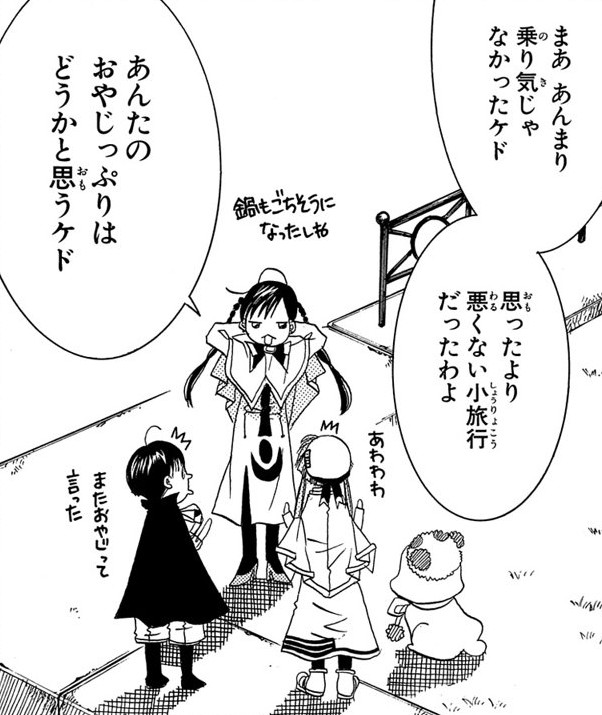
Al shows Akari and Aika around his workplace. Afterwards, Akari thanks Al for showing them around and she prompts Aika to do the same.
- 藍華:
- 「まあ あんまり乗り気じゃなかったケド思ったより悪くない小旅行だったわよ」
- “Well, I wasn't that enthusiastic, but the excursion wasn't as bad as I thought it would be.”
- Literal: “Well, my riding spirit wasn't really there, but it was a short trip that wasn't bad compared with what I thought.”
- 「あんたのおやじっぷりはどうかと思うケド」
- “I still have a problem with your old man style, though.”
Key Points
- 乗り気 describes being mentally on board with an idea and ready to go along with it.
- 「あんまり 乗り気じゃなかった」 means “I wasn’t very into it.”
- The negative form keeps the tone moderate rather than saying she hated it.
Vocabulary
| Word | English | Meaning |
|---|---|---|
| まあ | Well | まあ is a soft “well” that eases into what the speaker says, or accepts something half-heartedly. It also shows mild surprise, like “oh my”. |
| あんまり | Not very | あんまり is a casual form of あまり. With a negative, it means “not very” or “not much”. On its own, it means “too much”. |
| 乗り気 | Enthusiasm | 乗り気 is eagerness to do something. 乗り気じゃない means not being keen on it. |
| 思う | Think | 思う is to have a thought, feeling, belief, or hope about something. |
| より | Than | より marks the thing being compared against: “than”. It can also mean “from”. |
| 悪い | Bad | 悪い means bad, wrong, or at fault. In conversation, it can also express an apology. |
| 小旅行 | Short trip | 小旅行 is a casual trip that lasts for a short period of time, such as a day trip or a one-night stay. |
| あんた | You | あんた is a casual, blunt word for “you”. Between close people it sounds familiar, but toward others it can sound rude. |
| おやじ | Dad | おやじ is a rough, casual word for one’s father or for a middle-aged man. |
| どうかと思う | To have doubts | どうかと思う is to doubt whether something is right or acceptable, a polite way to criticize. |
See Also
- Vocabulary: Enthusiasm with 乗り気
- Grammar: Past tense with 〜た・〜だ
- Grammar: Marking the topic with は and も
- Grammar: The copula だ
- Grammar: Quoting and reporting with と and って
- Grammar: More than with 〜方が and 〜より
- Grammar: Negation with 〜ない
- Grammar: Informing with よ
- Grammar: Than, more, and from with より
- Kanji: Going and carrying out with 行