Enthusiasm for shogi club with 乗り気
Vocabulary Explanation: Enthusiasm with 乗り気
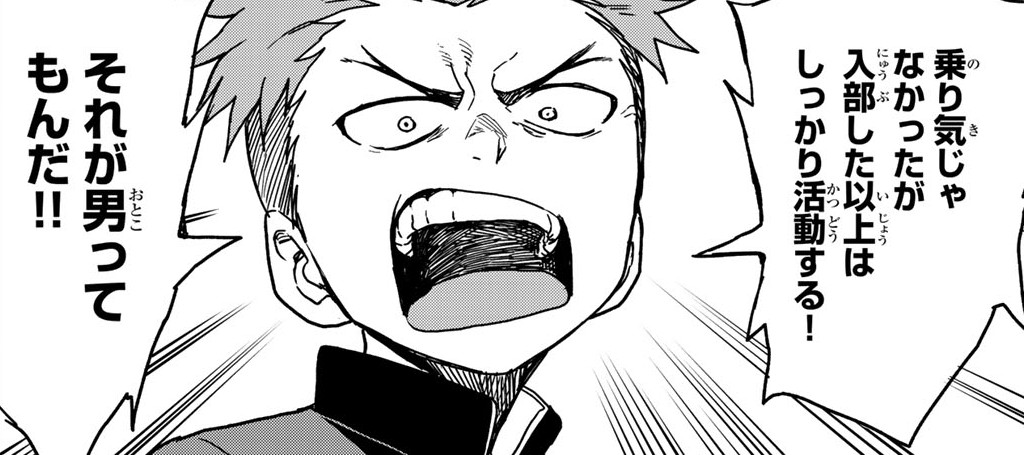
Sakurako forces Takeru to join the shogi club. When he suggests she join as well, she refuses and tells him not to go either, or else he’ll be in the way there.
- タケル:
- 「乗り気じゃなかったが入部した以上はしっかり活動する!」
- “I wasn't enthusiastic, but now that I'm in the club, I'll work hard!”
- Literal: “My riding spirit wasn't there, but now that I've joined the club, I'll participate properly!”
- 「それが男ってもんだ!!」
- “That's what it means to be a man!!”
Key Points
- 乗り気じゃなかった means Takeru was not really into the idea at first.
- In this scene, 乗り気 is about his attitude toward joining the club, not literal “riding”.
- The first half admits a reluctant starting point: “I wasn’t enthusiastic, but…”
- が here works like “but”, leading into the stronger resolution that follows.
- 〜した以上 means “since that is now the case” or “once I’ve done that”.
- It carries a sense of obligation: having joined, he should take the club seriously.
- しっかり adds the idea of doing club activities in a solid, responsible way.
- The line shows a switch from reluctance to determination.
Vocabulary
| Word | English | Meaning |
|---|---|---|
| 乗り気 | Enthusiasm | 乗り気 is eagerness to do something. 乗り気じゃない means not being keen on it. |
| 入部 | Joining a club | 入部 means joining a school club or sports team. |
| 以上 | Above | 以上 means “at least” or “and above” when setting an inclusive lower limit. It can also mean “the preceding”, mark the end of a report, or introduce a conclusion based on what came before. |
| しっかり | Firmly | しっかり describes doing something properly and with care, or holding something firmly. It also describes a person who is reliable and sensible. |
| 活動 | Activity | 活動 means activity or organized action toward a purpose. |
| それ | That | それ points to something near the listener, or to something just mentioned. |
| 男 | Man | 男 is a man or boy. |
| もん | Because | もん ends a sentence to give a reason, often in a childish or pouting tone. It is a casual form of もの. |
See Also
- Vocabulary: Enthusiasm with 乗り気
- Grammar: Past tense with 〜た・〜だ
- Grammar: Marking the topic with は and も
- Grammar: Contrasting with 〜が〜
- Grammar: Negation with 〜ない
- Kanji: Entering and putting in with 入
- Kanji: Limits and basis with 以
- Kanji: Living and lively movement with 活
- Kanji: Motion and activation with 動
- Kanji: Sections and departments with 部