Feeling a bit better with 気が晴れる
Idiom Explanation: Feeling better with 気が晴れる
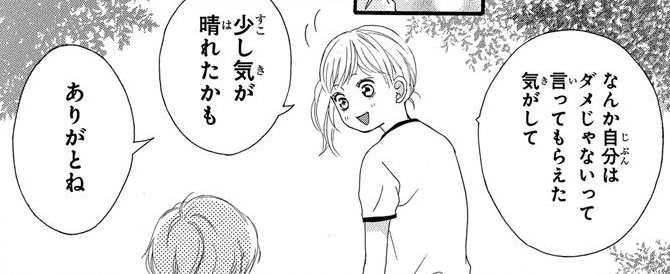
Futaba had been feeling the weight of uncertainty of her standing with Kou. A general discussion about boys and relationships with her friend Kikuchi clears up her feelings.
- 双葉:
- 「なんか自分はダメじゃないって言ってもらえた気がして」
- “It kind of felt like you were telling me I'm not hopeless.”
- 「少し気が晴れたかも」
- “I may be feeling a bit better.”
- Literal: “Maybe my spirit cleared up a little.”
- 「ありがとね」
- “Thanks.”
Key Points
1気が晴れた means the emotional cloud lifted
- The idiom describes Futaba feeling clearer or lighter after talking.
- It is about mood relief, not weather in this scene.
2少し keeps the improvement modest
- She says only a little of the heaviness has cleared.
- That matches uncertainty about Kou not being fully resolved.
3かも makes the feeling tentative
- かも means “maybe”, so Futaba is still checking her own emotions.
- The line sounds introspective rather than fully confident.
4ありがとね sounds warm and personal
- ありがと is the casual form of ありがとう.
- The sentence-ending ね softens the thanks and shares the feeling with the listener.
5言ってもらえた気がして explains why she feels better
- 〜てもらえた means she received the benefit of someone saying it.
- 気がして means “I felt like…” and leaves the thought hanging into the next line.
- The reassuring content is 自分はダメじゃない: “I’m not hopeless” or “there isn’t something wrong with me.”
Vocabulary
自分 (Oneself)
自分 means oneself, myself, yourself, or one’s own, depending on context.
言う (To say)
言う means to say or tell. It can also mean to call something by a particular name.
See Also
- Idiom: Feeling better with 気が晴れる
- Future entry: Past tense with 〜た・〜だ
- Grammar: Having someone do something with 〜てもらう
- Grammar: Quoting and reporting with と and って
- Grammar: Marking the topic with は and も
- Kanji: Dividing and portions with 分
アオハライド © its respective creators. It is used here for educational commentary.