Feeling running is better after all with 〜気がする
Grammar Explanation: Thinking or feeling something with 〜気がする
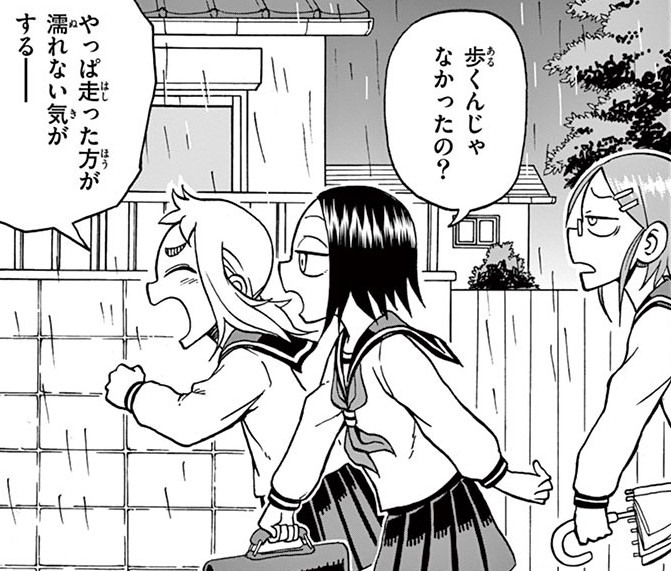
Mina proclaims she knows a shocking fact about being caught in the rain: it doesn’t matter whether you walk or run because you’ll get wet the same amount either way. Sanae says she heard running it better to avoid getting as wet. Mina says if it starts raining, she’ll walk, and Sanae has to run.
- サナエ:
- 「歩くんじゃなかったの?」
- “Weren't you going to walk?”
- ミナ:
- 「やっぱ走った方が濡れない気がするーーー」
- “Sure enough, I feel running's better to not get wet!”
- Literal: “After all, I feel like the running way won't get us wet!”
Key Points
1やっぱ shows a changed conclusion
- やっぱ is the casual form of やっぱり and means “after all” or “as I thought”.
- Mina is backing away from her earlier claim and switching to the opposite view.
2走った方が濡れない = “running is less likely to get you wet”
- The pattern Ⓐ方がⒷ compares options and says Ⓐ is the better one.
- Here Mina means that running is the better choice if the goal is not getting wet.
3気がする softens the claim to a feeling or impression
- 気がする means “I feel like…” or “it seems to me…” rather than a firm factual conclusion.
- That makes her sound less certain and more like she is going with her instinct in the moment.
See Also
- Grammar: Thinking or feeling something with 〜気がする
- Future entry: Past tense with 〜た・〜だ
- Grammar: Reasoning with 〜のだ
あしたは土曜日 © its respective creators. It is used here for educational commentary.