Feeling you've gained weight with 〜気がする
Grammar Explanation: Thinking or feeling something with 〜気がする
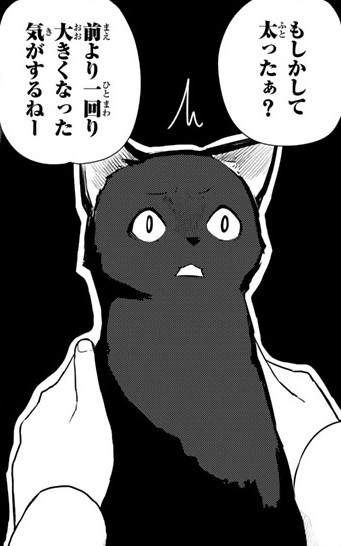
Nao sees Makoto’s cat, Chito. She stops to pet the cat when she notices something.
- なお:
- 「もしかして太ったぁ?前より一回り大きくなった気がするねー」
- “Could it be you've gotten fatter? I feel you've grown a size bigger than before.”
- Literal: “Could it be you got fat? I feel like you became one size bigger than before.”
Key Points
- 大きくなった気がする means Nao feels Chito has grown, not that she is proving it.
- 前より means “compared with before”.
- 一回り大きい describes being one size or one noticeable degree bigger.
- もしかして太ったぁ? softens the direct question “did you gain weight?”
Vocabulary
| Word | English | Meaning |
|---|---|---|
| もしかして | Perhaps | もしかして introduces a guess the speaker is unsure about: “could it be that…?” |
| 太る | To gain weight | 太る is to put on weight and get fatter. |
| 前 | Front | 前 is the front of something. It also means an earlier time, as in 三年前, “three years ago”. |
| より | Than | より marks the thing being compared against: “than”. It can also mean “from”. |
| 一回り | One size | 一回り is one size or one degree in comparison: 一回り大きい means “a size bigger”. It also means one round or lap. |
| 大きい | Big | 大きい describes something large in size or amount. 大きくなる means to grow bigger or grow up. |
| なる | To become | なる is to change into a different state or become something. It also means something turns out a certain way. It is also written 成る. |
| 気 | Spirit | 気 is a person’s mind, mood, or feelings. It appears in many expressions, such as 気がする, “to have a feeling”. |
| する | To do | する is to do or perform something. It also turns many nouns into verbs, as in 勉強する. |
See Also
- Grammar: Thinking or feeling something with 〜気がする
- Grammar: Past tense with 〜た・〜だ
- Grammar: Consonant doubling with 促音
- Grammar: Seeking agreement with ね
- Grammar: Than, more, and from with より