Finishing the bolognese sauce with 味を調える
Vocabulary Explanation: Collocations for cooking
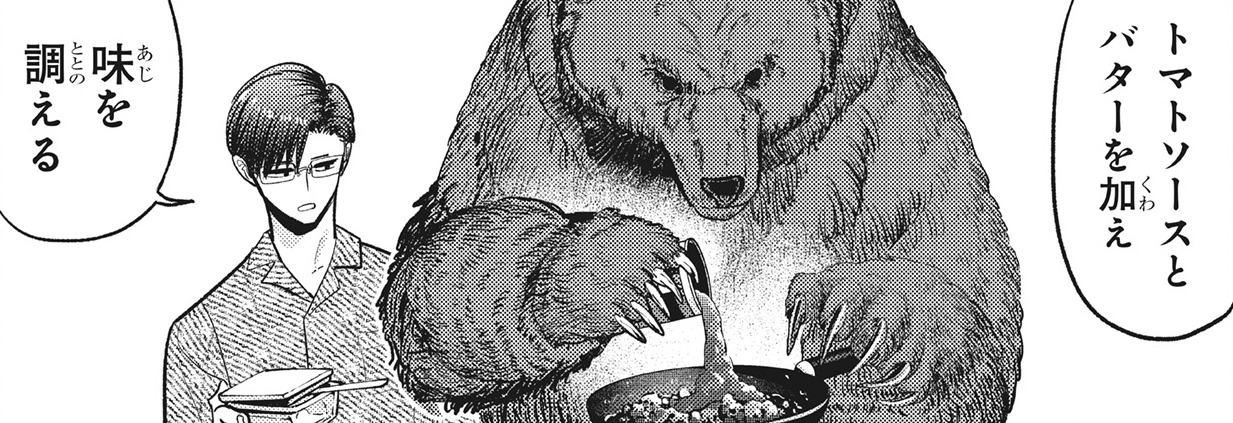
Kumada’s bear has bought a pile of kitchen gadgets and indicates they’re all for him. To show them off, it chops onion, carrot, and celery in a pull-cord chopper and starts on a meat sauce. Kumada calls out each step as the bear cooks, like the narrator of a cooking show.
- 熊田:
- 「トマトソースとバターを加え」
- “Add tomato sauce and butter...”
- 熊田:
- 「味を調える」
- “...and adjust the seasoning.”
Key Points
- 味を調える means tasting a dish and adjusting it until the flavor is right. It’s the standard last step in Japanese recipes: 塩・コショウで味を調える, “season to taste with salt and pepper.”
- 調える means to put something in proper order. With 味 as the object, it’s the flavor that gets put right. The word sounds like a recipe, so Kumada uses it as if he were narrating a cooking show.
- Compare 味をつける, to season or flavor food in the first place. 味を調える is the fine-tuning that comes after.
- 調える and 整える are read the same way. 整える is for tidying and arranging, as in 髪を整える, to fix your hair. 調える is for adjusting or getting something ready, so flavor takes 調える.
- Many cookbooks and recipe sites write it in kana, 味をととのえる, which avoids the choice entirely.
- 加え is the stem of 加える, to add. A bare stem can join two clauses the way the て-form does: 加え、味を調える means “add it and adjust the seasoning.”
- Linking with the bare stem sounds written and formal. Recipes use it to string steps together, and the earlier steps on this page do the same: 赤ワインを入れ、汁気を飛ばし.
Vocabulary
トマトソース (Tomato sauce)
トマトソース is a sauce made by cooking down tomatoes, used on pasta and other Western-style dishes.
バター (Butter)
バター is butter, the fat churned from cream and used in cooking, baking, and on bread.
加える (To add)
加える is to add something to what is already there, such as an ingredient to a dish or a member to a group.
味 (Taste)
味 is the taste or flavor of food. It also means a charm or appeal.
調える (To adjust; to get ready)
調える is to put something into the right state, such as adjusting a dish’s flavor, as in 味を調える, or getting things ready for an occasion. For tidying or arranging, the same word is written 整える.
See Also
- Vocabulary: Collocations for cooking
- Kanji: Taste and meaning with 味