Fishermen drinking at home with 漁師
Kanji Explanation: Fishing and catches with 漁
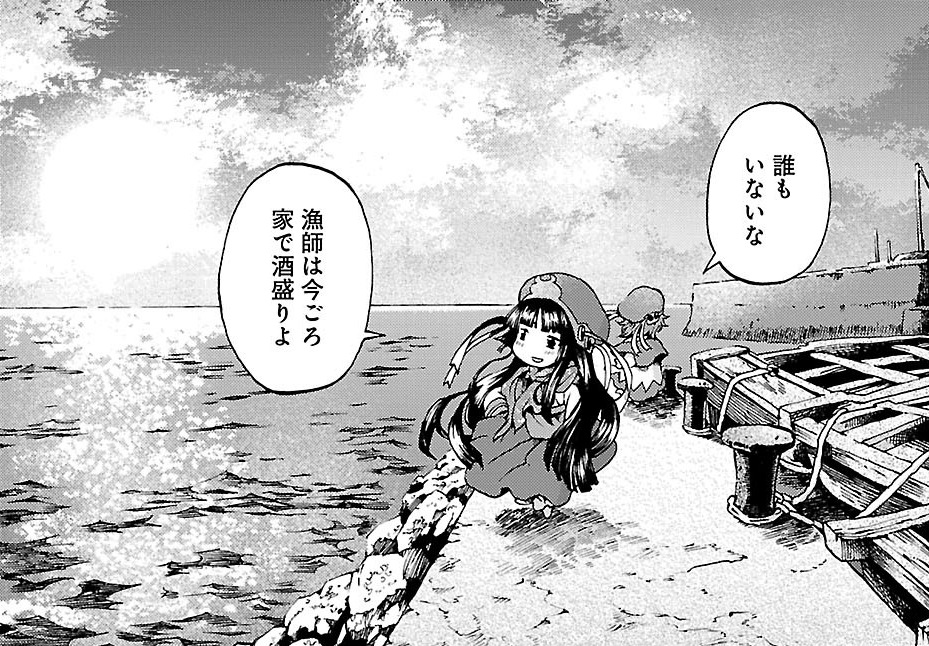
Mikochi has spent the day showing Hakumei around a busy port town. After the vendors in the market pulled Mikochi in to taste their seasonings, the worn-out pair decided to see the harbor before heading home. They reach the pier as the sun is going down.
- ハクメイ:
- 「誰もいないな」
- “Nobody's here.”
- ミコチ:
- 「漁師は今ごろ家で酒盛りよ」
- “The fishermen are all at home drinking by now.”
Key Points
1漁師 for people who fish
- Here 漁師 means fishermen, the people who make their living catching fish. Mikochi uses it for the crews whose boats are tied up along the pier.
- 漁 is read りょう in this word. Many other 漁 words use ぎょ, such as 漁業, the fishing industry, and 漁港, a fishing port, so learn the reading with each word.
- 師 marks someone who practices a trade, as in 医師, a doctor.
2Guessing about others with 今ごろ
- 今ごろ means “about now” or “by now”. Mikochi uses it to picture what people somewhere else are doing at this moment.
- The fishermen are out of sight, so she is guessing from what she knows about their day. They head out early, and by evening the work is done.
3Ending on a noun with よ
- Mikochi ends with the noun 酒盛り plus よ, without だ or a verb. Dropping だ before よ sounds soft and is common in Mikochi’s speech.
- The full idea is closer to 酒盛りをしている, “they’re having drinks”, but the noun alone carries it.
- よ tells Hakumei something she didn’t know: why the harbor is empty.
4Nobody with 誰も and a negative
- 誰も followed by a negative verb means “nobody”. 誰もいない is “there’s no one here”.
- The な at the end makes it sound like Hakumei is saying it half to herself as she looks around.
Vocabulary
| Word | English | Meaning |
|---|---|---|
| 誰も | No one | 誰も with a negative verb means no one or not anyone, as in 誰もいない, “nobody is here”. |
| いる | To be | いる is to exist or be somewhere, for people and animals. After a て-form verb, it shows an ongoing action or a continuing state. |
| 今ごろ | About now | 今ごろ is a spelling of 今頃, “about this time”. It is often used to guess what someone elsewhere is doing right now. |
| 家 | House | 家 is a building where people live. |
| 酒盛り | Drinking party | 酒盛り is a gathering where people drink together and make merry. |
See Also
- Kanji: Fishing and catches with 漁
- Grammar: Informing with よ
- Vocabulary: Something, nothing, and anything with question words
- Grammar: Marking the topic with は and も
- Kanji: Homes and specialists with 家
- Kanji: Now and the present with 今
ハクメイとミコチ © its respective creators. It is used here for educational commentary.