Furthermore, it's just a bonus item with それに〜
Grammar Explanation: In addition to with それに〜
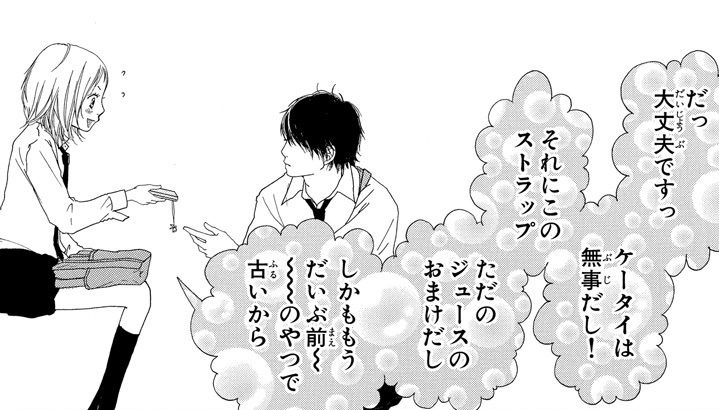
After school, Ninako notices Ren sleeping a few seats away on the train. When Ren wakes and rushes for his stop, he knocks Ninako’s phone from her hand. The phone hits the floor, and the strap charm breaks. Ren misses his exit while apologizing and offers to replace the charm.
- 仁奈子:
- 「だっ 大丈夫ですっ」
- “I—it's all right.”
- 「ケータイは無事だし!」
- “Since my cell phone is safe!”
- Literal: “My phone is safe, and...”
- 「それにこのストラップただのジュースのおまけだし」
- “Furthermore, this strap is just a juice prize.”
- Literal: “And besides, this strap is just a bonus that came with juice.”
- 「しかももうだいぶ前〜〜〜〜のやつで古いから」
- “Plus, it's from way back when, so it's old.”
- Literal: “Plus, it's from quite a while ago, so it's old.”
Key Points
1それに = besides that
- Ninako uses それに after saying the phone is safe, adding the strap’s low value as a second reason Ren does not need to worry.
- The flow is: “My phone is fine. Besides, this strap was not valuable.”
2Casual explanatory ending: だし
- Both 無事だし and おまけだし use だし to stack reasons in an informal spoken way.
3ただのジュースのおまけ
- ただの means “nothing more than”, so she downplays the strap as a cheap extra.
- おまけ means a free extra or bonus item that comes with a purchase, which matches the translation “juice prize”.
4Omitted listener-facing meaning
- The fuller idea is something like: “それに、このストラップは ただのジュースのおまけだし” with は making このストラップ the topic
- Ninako leaves part of the thought unsaid: “So it is not a big loss.”
5て is linking descriptions
- やつで connects a noun description to 古い. Ninako says the strap charm is an item from long ago and is old.
6Tone: she is minimizing the damage
- Ninako moves from 無事だし to それに to おまけだし to しかも, piling on reasons because she is flustered and trying to reassure Ren quickly.
Vocabulary
大丈夫 (All right)
大丈夫 means all right, okay, safe, or no problem. It is a common word of reassurance.
無事 (Safety)
無事 means safe, unharmed, or without incident.
この (This)
この means “this” or “these” and comes directly before a noun. It points to something near the speaker or something the speaker is referring to in the conversation.
See Also
- Grammar: In addition to with それに〜
- Grammar: Marking the topic with は and も
- Grammar: Connecting actions with 〜て・〜で
- Kanji: Absence and nothingness with 無
- Kanji: Matters and events with 事
ストロボ・エッジ © its respective creators. It is used here for educational commentary.