Furthermore, this room is too warm with さらに〜
Grammar Explanation: Furthermore with さらに〜
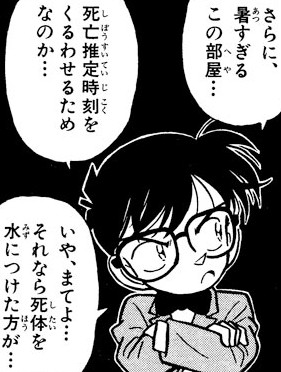
Upon walking in on a murder scene, Conan goes right to work making observations about the blood-covered body and its surroundings. He notes how the room is torn apart save for one upright chair beside the deceased.
- コナン:
- 「さらに、暑すぎるこの部屋…」
- “Furthermore, this room is too warm...”
- Literal: “Furthermore, this room, which is too hot...”
- 「死亡推定時刻をくるわせるためなのか…」
- “Is it to confuse the estimated time of death...?”
- Literal: “Is it for the purpose of throwing off the estimated time of death...?”
- 「いや、まてよ… それなら死体を水につけた方が…」
- “No, wait... If that's the case, it would be better to put the corpse in water...”
- Literal: “No, wait... if that were so, putting the corpse in water would be...”
さらに is used here to provide additional observations.
Key Points
1さらに adds another clue
- Conan is already listing suspicious details about the room.
- さらに works like “furthermore” or “in addition”, introducing one more observation.
2暑すぎるこの部屋 is an inverted noun phrase
- Instead of saying この部屋は暑すぎる, Conan says 暑すぎるこの部屋.
- That structure spotlights “this too-hot room” as another suspicious item on his list.
Vocabulary
この (This)
この means “this” or “these” and comes directly before a noun. It points to something near the speaker or something the speaker is referring to in the conversation.
部屋 (Room)
部屋 means a room separated from other spaces in a building.
死体 (Dead body)
死体 refers to the body of a dead person or animal. It is blunt and clinical, so it can sound cold when used for a person.
See Also
- Grammar: Furthermore with さらに〜
- Grammar: Giving advice with 〜た+方がいい
- Grammar: If that's the case with なら
- Kanji: Body and substance with 体
- Kanji: Death and dying with 死
- Kanji: Sections and departments with 部
- Kanji: Shelter and shops with 屋
名探偵コナン © its respective creators. It is used here for educational commentary.