Getting change ready for the jam stall with 釣り銭
Kanji Explanation: Fishing and baiting with 釣
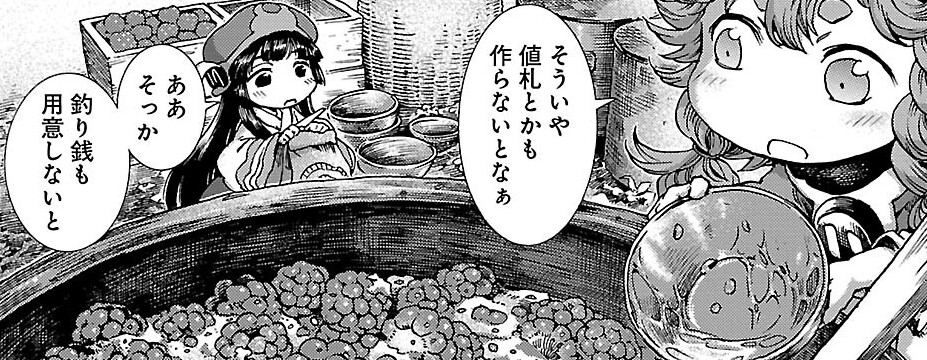
A restaurant has dropped out of tomorrow’s stall festival, so Mikochi takes over its stall to sell fresh raspberry jam with bread. After a long day of buying ingredients, she and Hakumei start on the jam, layering raspberries and sugar in a giant pot.
- ハクメイ:
- 「そういや値札とかも作らないとなぁ」
- “Come to think of it, we've gotta make price tags and stuff, too.”
- ミコチ:
- 「ああ そっか」
- “Oh, right.”
- 「釣り銭も用意しないと」
- “We need to have change ready, too.”
Key Points
1釣り銭, change for customers
- 釣り銭 is the money a seller hands back when a customer pays more than the price. 銭 means money or coins.
- In everyday speech the same thing is お釣り. Shops and signs use 釣り銭, and anyone running a stall has to keep some on hand.
- This 釣り has nothing to do with fishing, even though it’s written with the same kanji.
2〜ないと, “have to”
- 作らないと and 用意しないと are shortened from 〜ないといけない, “have to”. Dropping the ending is common in casual speech, especially when talking through a to-do list.
- Hakumei softens hers with なぁ, as if thinking aloud.
3とかも and も
- とか names one example from a longer list: 値札とか, “price tags and such”. The も after it means “also”, on top of the jam itself.
- Mikochi’s 釣り銭も adds one more item to the list.
4そういや and そっか
- そういや is a casual contraction of そういえば, “come to think of it”. そっか is a casual そうか, “oh, right”.
Vocabulary
| Word | English | Meaning |
|---|---|---|
| そういえば | Come to think of it | そういえば brings up something the speaker has just been reminded of, like “come to think of it” or “speaking of which”. It often opens a change of subject. |
| 値札 | Price tag | 値札 is the tag on an item in a shop that shows its price. |
| 作る | To make | 作る means to create or prepare something. |
| 釣り銭 | Change | 釣り銭 is the change a cashier gives back when a customer pays more than the price. |
| 用意 | Preparation | 用意 is getting what you need ready ahead of time. |
See Also
- Kanji: Fishing and baiting with 釣
- Grammar: Must do with 〜なければならない
- Grammar: Marking the topic with は and も
- Grammar: How casual contractions work
- Kanji: Making and creating things with 作
- Kanji: Thought and intention with 意
ハクメイとミコチ © its respective creators. It is used here for educational commentary.