Going to say good morning with 行っといで
Grammar Explanation: Contracting 行っておいで to 行っといで
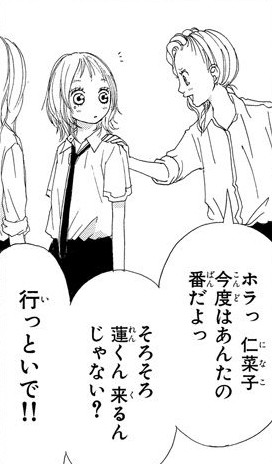
Ninako confessed her feelings to Ren, even knowing he already has a girlfriend and would turn her down. After not seeing Ren during summer break, Ninako wonders if she’ll still be able to greet him normally. After a boy she turned down greets her normally, Ninako feels more confident.
- つかさ:
- 「ホラっ 仁奈子 今度はあんたの番だよっ」
- “Hey, Ninako, now it's your turn.”
- 「そろそろ連くん 来るんじゃない?」
- “Won't Ren being coming soon?”
- Literal: “Isn't Ren probably coming soon?”
- 「行っといで!!」
- “Go for it!!”
- Literal: “Go and come back!!”
Key Points
1行っといで is a casual contraction of 行っておいで
- 「行っておいで」 literally has the feel of “go and do it, then come back”.
- In fast casual speech, てお often contracts to と, giving 行っといで.
- 君 is an honorific suffix used after names, typically for boys or men. It’s commonly used by teachers addressing male students, by friends among young people, or by superiors addressing junior colleagues, and can also be used for girls in childhood or casual contexts.
Vocabulary
今度 (This time)
今度 means “this time” or “next time”, depending on context.
来る (To come)
来る means to come or move toward the speaker or the place being discussed.
行く (To go)
行く means to go or move toward a place away from the speaker.
See Also
- Grammar: Contracting 行っておいで to 行っといで
- Grammar: Negation with 〜ない
- Grammar: Marking the topic with は and も
- Kanji: Measures and degrees with 度
- Kanji: Now and the present with 今
ストロボ・エッジ © its respective creators. It is used here for educational commentary.