Gotten completely lost in an abandoned building with 〜ちゃう
Grammar Explanation: Doing completely or ending up doing with 〜てしまう and 〜ちゃう
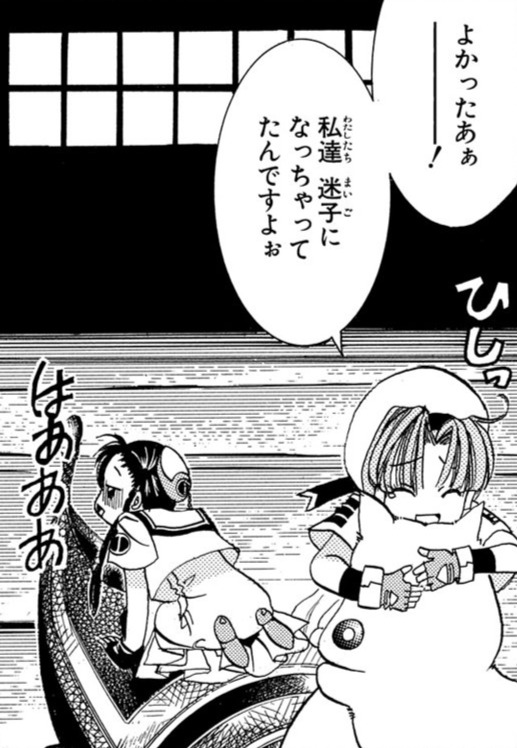
During training, Akari spots her company’s feline president, President Aria, sailing by in a small gondola. She instructs Aika to row the training gondola in the same direction, and the two follow him down an alley that’s normally gated from entry. The two lose sight of Aria and find themselves going in circles through flooded abandoned buildings. After some time, Aria’s gondola floats by.
- 灯里:
- 「よかったあぁーーーーー! 私達 迷子になっちゃってたんですよぉ」
- “Oh, thank goooodness! We had gotten completely lost, you know!”
- Literal: “Thank goodness! We had ended up becoming lost children!”
Key Points
1迷子になっちゃってた = had gotten lost
- 迷子になる means “to become lost”.
- なっちゃって is the casual spoken form of なってしまって, adding the sense that Akari and Aika ended up in an unwanted situation.
- なっちゃってた contracts なってしまっていた: they became lost, and that lost state continued until President Aria appeared.
2んです makes it an explanation
- たんです is たのです in casual explanatory form, giving the reason for her huge relief: “we had gotten lost, you see.”
Vocabulary
私達 (We)
私達 means “we” or “us”, a group that includes the speaker.
See Also
- Grammar: Doing completely or ending up doing with 〜てしまう and 〜ちゃう
- Future entry: Past tense with 〜た・〜だ
- Grammar: Reasoning with 〜のだ
- Kanji: Privacy and self with 私
- Kanji: Reaching and attaining with 達
ARIA The MASTERPIECE © its respective creators. It is used here for educational commentary.