Greeting a cousin's friend with どうも
Vocabulary Explanation: Ways to say thank you in Japanese
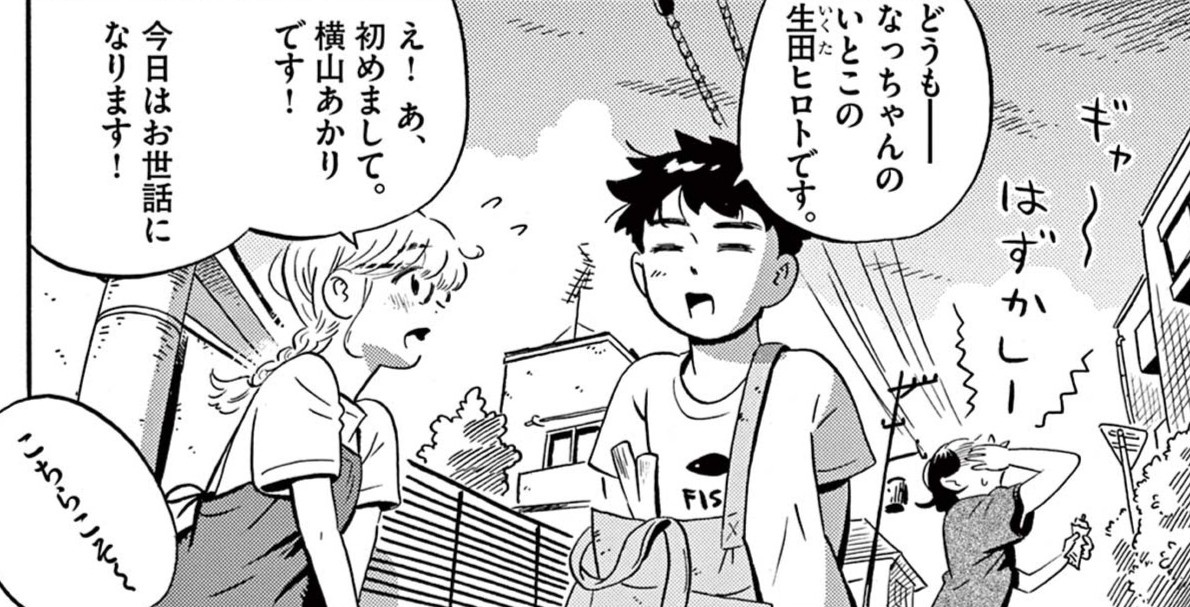
On his way home from buying groceries, Hiroto sees his cousin Natsumi cheering and dancing over a winning popsicle stick. While Natsumi agonizes over having been seen, Hiroto notices she’s brought a friend he hasn’t met.
- なつみ:
- 「ぎゃ〜 はずかしー」
- “Gah, how embarrassing!”
- ヒロト:
- 「どうもーーー なっちゃんのいとこの生田ヒロトです。」
- “Howdy. I'm Nacchan's cousin, Hiroto Ikuta.”
- あかり:
- 「え! あ、初めまして。横山あかりです!」
- “Oh, ah, pleased to meet you. My name's Akari Yokoyama!”
- 「今日はお世話になります!」
- “Thank you for having me today!”
- ヒロト:
- 「こちらこそ〜」
- “The pleasure is mine!”
Key Points
- Hiroto is not saying “thank you”. どうも can stand alone as a brief “hi” when the situation makes the greeting clear.
- The first の makes なっちゃんのいとこ, “Nacchan’s cousin”.
- The second の links that description to his name.
- 今日は sets “today” as the frame. お世話になります is a polite set phrase used when someone expects another person’s help or care.
- Here Akari is thanking Hiroto in advance for having her over, rather than thanking him for something already finished.
- こちら refers to Hiroto’s side, and こそ singles it out. His reply amounts to “No, the pleasure is mine.”
Vocabulary
| Word | English | Meaning |
|---|---|---|
| はずかしい | Embarrassing | はずかしい describes the feeling of being embarrassed or ashamed, or something that causes it. It is also written 恥ずかしい. |
| どうも | Thanks | どうも is a casual way to say thanks or hello. Before ありがとう or すみません, it adds emphasis. It also means “somehow” or “it seems”. |
| いとこ | Cousin | いとこ is a child of one’s aunt or uncle. |
| 初めまして | Nice to meet you | 初めまして is the set phrase said when meeting someone for the first time. |
| 今日 | Today | 今日 means today. In formal writing, it can also mean the present day or current era. |
| お世話になる | To be looked after | お世話になる is to receive someone’s help or care. お世話になります is a set phrase of thanks for help you are receiving or will receive. |
See Also
- Vocabulary: Ways to say thank you in Japanese
- Grammar: Polite style with です and ます
- Grammar: Marking the topic with は and も
- Kanji: Now and the present with 今