Greeting a cousin's friend with どうも
Vocabulary Explanation: Ways to say thank you in Japanese
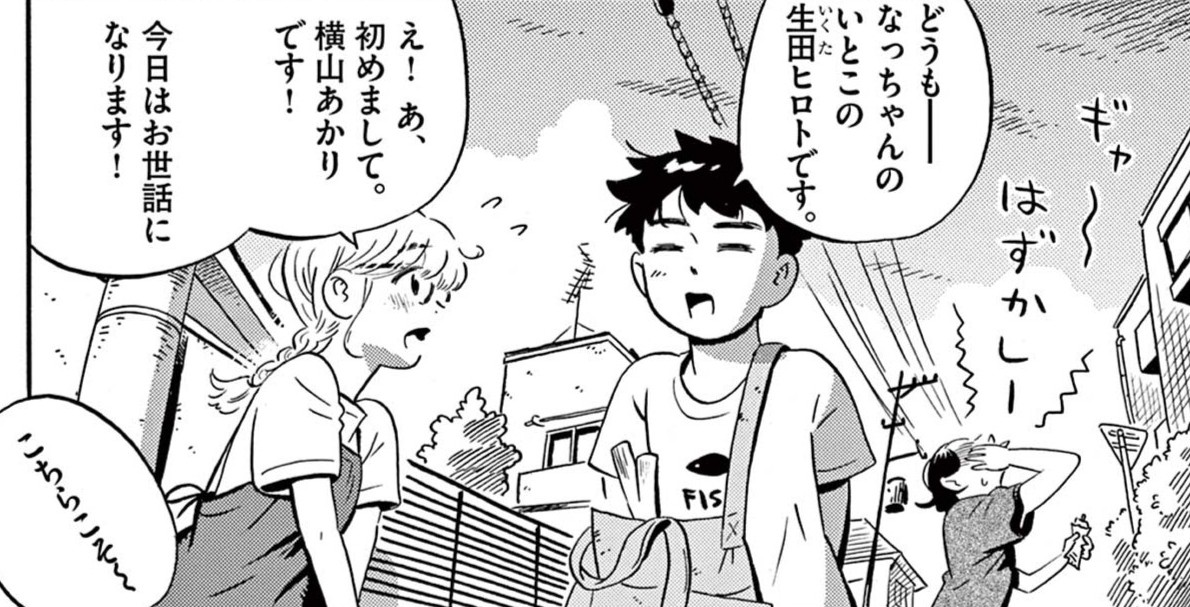
On his way home from buying groceries, Hiroto sees his cousin Natsumi cheering and dancing over a winning popsicle stick. While Natsumi agonizes over having been seen, Hiroto notices she’s brought a friend he hasn’t met.
- なつみ:
- 「ぎゃ〜 はずかしー」
- “Gah, how embarassing!”
- ヒロト:
- 「どうもーーー なっちゃんのいとこの生田ヒロトです。」
- “Howdy. I'm Nacchan's cousin, Hiroto Ikuta.”
- あかり:
- 「え! あ、初めまして。横山あかりです!」
- “Oh, ah, pleased to meet you. My name's Akari Yokoyama!”
- 「今日はお世話になります!」
- “Thank you for having me today!”
- ヒロト:
- 「こちらこそ〜」
- “The pleasure is mine!”
Key Points
1どうも works as a casual greeting here
- Hiroto is not saying “thank you”. どうも can stand alone as a brief “hi” when the situation makes the greeting clear.
2なっちゃんのいとこの生田ヒロト identifies Hiroto by his relationship
- The first の makes なっちゃんのいとこ, “Nacchan’s cousin”.
- The second の links that description to his name.
3今日はお世話になります = “Thank you for having me today”
- 今日は sets “today” as the frame. お世話になります is a polite set phrase used when someone expects another person’s help or care.
- Here Akari is thanking Hiroto in advance for having her over, rather than thanking him for something already finished.
4こちらこそ returns the courtesy
- こちら refers to Hiroto’s side, and こそ singles it out. His reply amounts to “No, the pleasure is mine.”
Vocabulary
今日 (Today)
今日 means today. In formal writing, it can also mean the present day or current era.
See Also
- Vocabulary: Ways to say thank you in Japanese
- Grammar: Polite style with です and ます
- Grammar: Marking the topic with は and も
- Kanji: Now and the present with 今
ひらやすみ © its respective creators. It is used here for educational commentary.