Have to wear a yukata with 〜なくちゃ
Grammar Explanation: Must do with 〜なければならない
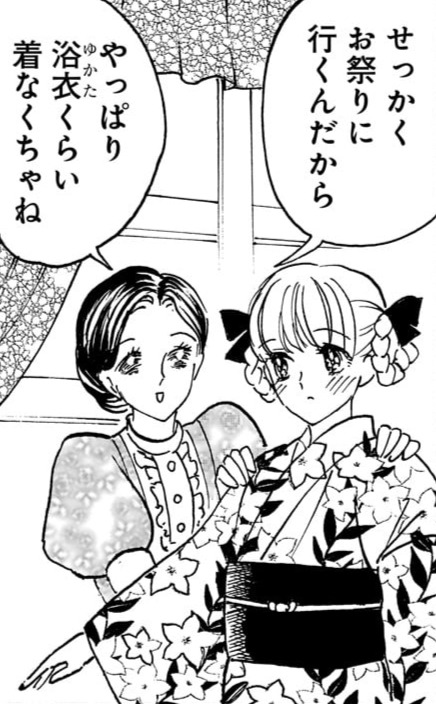
Lulu has plans to visit a local festival with her friends from class. Her mother helps her dress for the occasion.
- ママ:
- 「せっかくお祭りに行くんだから」
- “Since you're going to the festival and all...”
- 「やっぱり浴衣くらい着なくちゃね」
- “You really should wear a yukata at least.”
- “Since you're going to the festival and all...”
Key Points
着なくちゃ = have to wear
The verb is 着る “to wear”; its negative stem 着ない becomes 着なくちゃ in this obligation pattern.
〜なくちゃ is a casual contraction of 〜なければならない or 〜なければいけない, used here as “have to”.
せっかく…んだから sets up the reason
せっかくお祭りに行くんだから means “since you’re going to the festival after all”.
The んだから gives the reason for the mother’s suggestion.
やっぱり adds “of course”
やっぱり frames the yukata as the expected choice for a festival, matching the translation’s “really”.
浴衣くらい softens the expectation
くらい presents the yukata as the least fitting thing for the occasion: “at least a yukata” or “something like a yukata”.
Final ね makes it conversational
The sentence-ending ね invites agreement, so the line sounds like friendly parental guidance rather than a strict order.