Hesitant to wear contacts with 抵抗
Kanji Explanation: Resistance and contact with 抵 (Future entry)
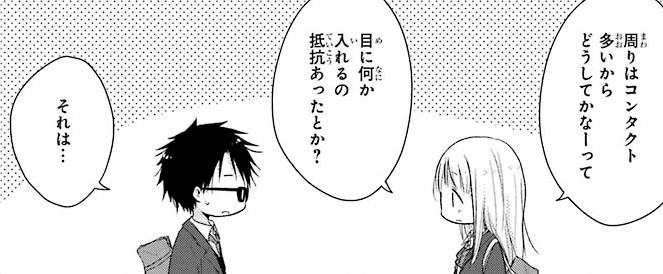
Seeing Shun again for the first time in seven years, Sana notices he’s now wearing glasses. She asks him why he doesn’t wear contacts.
- 紗奈:
- 「周りはコンタクト多いからどうしてかなーって」
- “Most people wear contacts, so I was kind of wondering why.”
- 「目に何か入れるの抵抗あったとか?」
- “Is it because you're hesitant with putting something in your eye?”
- Literal: “Did you have resistance to putting something in your eye, or something?”
- 駿:
- 「それは…」
- “Well...”
Key Points
1抵抗がある = to feel resistance or hesitation toward something
- Here, 抵抗がある means “to feel uncomfortable about doing it” or “to be reluctant about it”, not physical resistance.
2Casual phrasing: 目に 何か 入れるの抵抗あった
- This is a casual spoken shortening of 目に 何かを 入れるのに 抵抗があった.
- The omitted を, に, and が are easy to miss, but the meaning is still “you had resistance to putting something in your eye”.
3〜の turns the action into “the act of doing it”
- 目に 何か 入れるの means “putting something in your eye” as an action or experience.
- That lets the sentence treat the whole action as the thing Shun might feel reluctant about.
4とか softens the question
- とか makes the guess sound less direct, like “or something?” or “maybe?”.
- Sana is suggesting a possible reason gently rather than stating it confidently.
Vocabulary
何か (Something)
何か means something or anything. It can also introduce an uncertain question, as in “Is something wrong?”
抵抗 (Resistance)
抵抗 means resistance or opposition to a physical, social, psychological, or technical force.
See Also
- Future entry: Past tense with 〜た・〜だ
- Grammar: Quoting and reporting with と and って
- Grammar: Marking the topic with は and も
僕が僕であるために。 © its respective creators. It is used here for educational commentary.