Hot tea after a rainy grocery run with お茶を淹れる
Vocabulary Explanation: Collocations for cooking
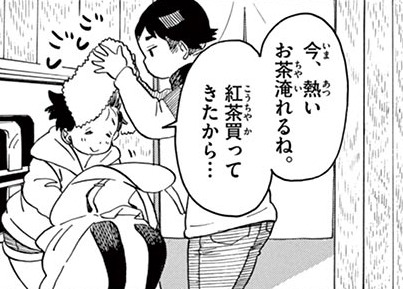
Kiyo and Riko come home from a grocery run in the cold rain. Kiyo is relieved that the groceries in her backpack stayed dry, but she is soaked through herself, so Riko dries her hair with a towel.
- 理子:
- 「今、熱いお茶淹れるね。紅茶買ってきたから…」
- “I'll make you some hot tea right now. I picked up some black tea, so...”
- Literal: “Now, I'll brew hot tea. Because I bought black tea and came back...”
Key Points
- 淹れる means to brew a drink by steeping or pouring hot water through it. Tea and coffee both take it: お茶を淹れる, コーヒーを淹れる.
- 淹 isn’t a jōyō kanji, so you’ll also see お茶を入れる or お茶をいれる. They all mean the same thing.
- Riko drops を, as people often do in casual speech: お茶淹れる.
- 淹れる is in the plain non-past form here, and the line is about what Riko is going to do. Plain non-past works for a decision about the near future, and ね makes it an offer to Kiyo.
- お茶 can mean green tea in particular, or tea and hot drinks in general. Riko starts with the general word, then names the kind in the next sentence.
- 紅茶 is black tea, written with 紅, “crimson”, for the color of the brewed tea.
- With a verb about the future, 今 means “right away”. 今淹れるね means she’ll go make it now.
- 〜てくる here means doing something and coming back. 買ってきた says she bought the tea while they were out.
- から gives a reason. Riko trails off before the rest of the sentence, but the point is clear: she has black tea, so that’s what she’ll make.
Vocabulary
今 (Now)
今 is the present moment, or these days.
熱い (Hot)
熱い describes something hot to the touch, such as tea, a bath, or a stove. Hot weather is 暑い instead. It also describes intense feelings, as in a heated gaze or a passionate speech.
お茶 (Tea)
お茶 is tea, especially Japanese green tea. It can also mean taking a break with a drink.
淹れる (To brew)
淹れる means to make tea or coffee by steeping it in hot water or pouring hot water through it. 淹 is not a jōyō kanji, so the same word is often written 入れる or いれる.
紅茶 (Black tea)
紅茶 means black tea, named for the reddish color of the brewed drink.
買う (To buy)
買う is to buy something.
くる (To come)
くる is to move toward the speaker or the place being talked about. After a て-form verb, it shows a change coming about, or going and coming back. It is the kana spelling of 来る.
See Also
- Vocabulary: Collocations for cooking
- Grammar: Coming and going with 〜てくる and 〜ていく
- Grammar: Because with 〜から
- Kanji: Now and the present with 今
- Kanji: Tea and tea culture with 茶